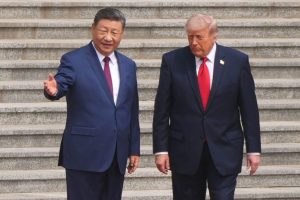
EnerVenue, a United‑States battery startup, began mass production at its new manufacturing facility in Changzhou, China, on the same day President Trump met President Xi in Washington. The move comes after the company scrapped a 2023 plan to build its first factory in Kentucky.
Why China, not Kentucky?
Chief Executive Henning Rath told Reuters the decision was driven by the depth of local expertise and supply‑chain resources in Changzhou, which the city markets as China’s “new energy capital.” He highlighted a dense cluster of hydraulics, pneumatics and automation specialists, allowing rapid iteration on what he called a “first‑of‑its‑kind” production line.
Rath said that without the Chinese ecosystem, scaling the technology would be “very difficult with the capital available.” Graduate engineers at the plant earn about 12,000 yuan (≈$1,800) a month, far below U.S. salaries, and local suppliers often develop equipment without upfront payment, reducing costs further.
Trump’s domestic manufacturing push
The shift illustrates the challenges President Trump faces in persuading high‑tech manufacturers to locate in the United States, even with his administration’s promises of lower taxes, streamlined permitting and other incentives. While the Trump administration has offered such benefits to attract jobs back home, EnerVenue’s experience suggests that skilled labor pools and supply‑chain depth remain decisive factors.
EnerVenue, founded by Stanford professor Yi Cui, also operates research and development in Fremont, California, and uses nickel‑hydrogen battery technology derived from NASA projects. The company raised more than $300 million in a March funding round, with investors including Full Vision Capital, Saudi Aramco and SLB.
Future plans
Rath declined to disclose the exact cost of the Changzhou plant but estimated it between $20 million and $50 million. The facility is about 95 % automated and is expected to employ roughly 400 workers by year‑end. EnerVenue aims to reach an annual capacity of 250 megawatt‑hours this year and scale to 1 gigawatt‑hour by the third quarter of 2027.
The company also intends to open additional factories in North America, the Middle East and Europe starting in 2028, with site selection to occur next year. When asked about a U.S. plant, Rath said the company wants to compete in the North American market but that “legislation and regulation” will influence the decision.
Original reporting: Appleton, WI News Feed (HLL/CB) — read the source article.