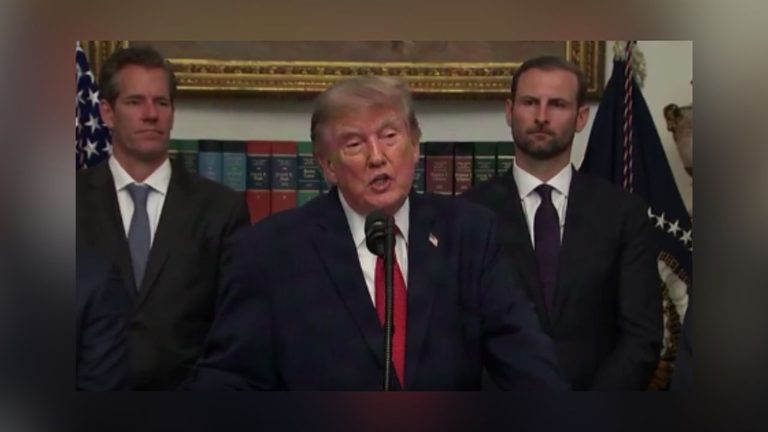
President Donald Trump announced a new, long‑term economic strategy aimed at Iran, citing the need for sustained pressure after diplomatic efforts have stalled. The administration plans to intensify sanctions on Iranian trade, oil smuggling, financial transfers, exchange houses, ship registries and front companies, with the goal of compelling Tehran to meet U.S. demands.
National Strategy Shifts to Economic Pressure
Trump described the plan as an “unprecedented economic campaign” against Iran, warning that any country providing financial or commercial assistance to Tehran would face severe consequences. Treasury Secretary Scott Bessent is scheduled to hold a news conference to detail additional measures, which may include targeting Chinese banks involved in Iranian oil transactions, expanding secondary sanctions and potentially confiscating Iranian assets under U.S. jurisdiction.
Current Context of the Conflict
The conflict entered its sixth month, with oil prices rising, the Strait of Hormuz heavily disrupted, and U.S. borrowing costs reaching their highest levels in nearly two decades. While the United States maintains a naval blockade, there are currently no talks scheduled with Iran.
Iranian officials have dismissed the sanctions approach, arguing that decades of U.S. sanctions have failed to force the Islamic Republic into submission. Former U.S. Ambassador James Jeffrey called the effort an “attrition campaign,” noting Iran’s history of circumventing sanctions.
Economic Impact on Iran
Iran’s economy was already under strain before the war, and recent developments have worsened conditions. Annual inflation is estimated at roughly 88%, fuel shortages have led to long lines at gas stations, and food prices have more than doubled. The Iranian rial has sharply declined as restrictions on oil exports squeeze government revenue.
Analysts such as Ali Vaez of the International Crisis Group and Sanam Vakil of Chatham House caution that Iran’s leadership may be willing to transfer economic pain to its population, viewing resistance as essential to the regime’s survival.
Broader Economic Effects
The disruption of the Strait of Hormuz, which previously saw about 20 million barrels of crude and refined products move through daily, has contributed to higher global energy prices. Brent crude recently climbed above $94 a barrel. Higher energy costs also pose inflation risks for the United States, with the yield on 30‑year Treasury bonds reaching its highest level since before the global financial crisis.
Political Landscape
The sanctions push comes as Trump approaches the 2026 midterm elections. A Reuters/Ipsos survey cited in the reporting found his approval rating at 33%, the lowest of his presidency, while about 80 % of respondents expected U.S. involvement in Iran to continue for an extended period. Vice President JD Vance has emphasized keeping oil and gas affordable for Americans as a priority.
Despite the political pressure, Trump said he is not operating under a deadline, stating, “I have no time schedule. I’m not in a hurry.” The administration believes that Iran’s worsening economy and domestic unrest will eventually force Tehran back to negotiations, while Iran appears to calculate that prolonged conflict will increase political and economic costs for Washington.
Looking Ahead
For now, the Trump administration is betting that a sustained sanctions campaign can achieve what military force and intermittent diplomacy have not: compel Iran to compromise without deploying U.S. ground troops to another prolonged Middle East war.
Original reporting: The Dallas Express — read the source article.