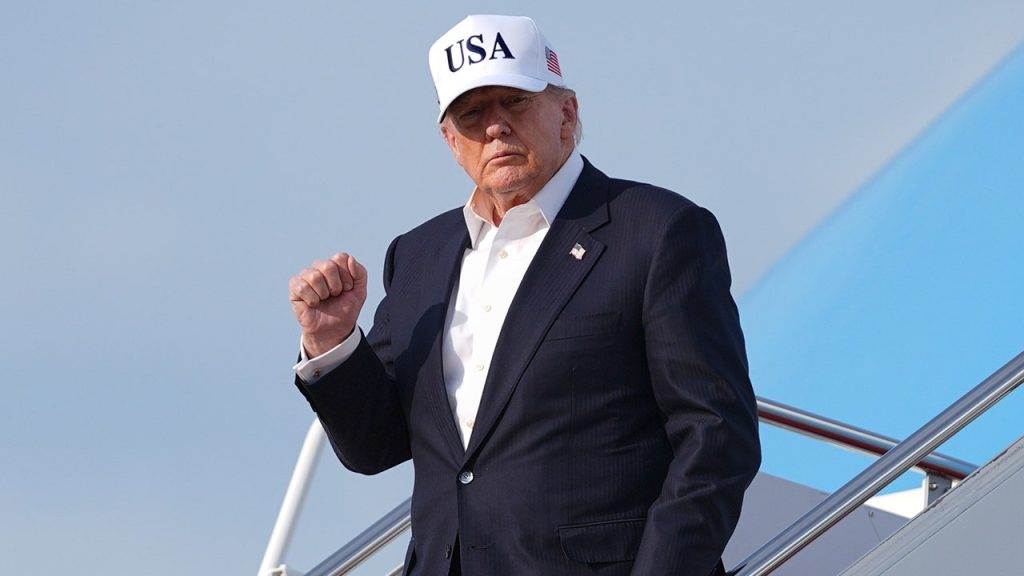
President Donald Trump’s role in Republican politics took center stage after Louisiana’s GOP primary, where Trump-backed Rep. Julia Letlow and former Treasurer John Fleming finished ahead of incumbent Sen. Bill Cassidy, a result that Rep. Anna Paulina Luna, House Speaker Mike Johnson and Sen. John Kennedy all pointed to as proof of the president’s continuing sway in the party in Washington and across the states.
The Louisiana primary outcome felt like more than just local politics; it was a national message about who sets the tone for the GOP. Julia Letlow led the field with roughly 45% of the vote, John Fleming came in at about 28% and Bill Cassidy trailed at just under 25%. That math landed like a cold splash to anyone still betting against Trump’s influence.
Rep. Anna Paulina Luna put it plainly on Sunday: “I think President Trump is a kingmaker within the Republican Party,” a line that landed with people who watch endorsements matter. Luna didn’t stop there when asked about the midterms: “I’m not a black piller when it comes to the midterms … the odds and the wind is in our sails.” Her tone was confident and unapologetic, pushing back on the doom-and-gloom polling narratives.
That confidence isn’t just talk. Luna highlighted a concrete shift in how many competitive races there are for Republicans, noting the number of true toss-ups has fallen. “It doesn’t mean that you don’t donate, and you don’t go up and vote in polls this November, but what it does mean is we have way better polling right now than we did as opposed to 2018,” she said. Then she laid out the contrast bluntly: “In 2018, we had, I think, 30 toss-up races. Now we have 19.”
House Speaker Mike Johnson echoed the same thread of thinking on Sunday with Shannon Bream, crediting Trump with continuing power back in Louisiana and beyond. “You see that over and over in all these elections. It’s the most powerful endorsement in the history of politics, and it continues to be shown,” he said, pointing to a pattern of candidates rising after the president throws his weight behind them. That is the kind of direct, measurable influence party loyalists crave.
Sen. John Kennedy told Peter Doocy something similar on the record, underlining that endorsements still move voters. “President Trump’s endorsement had a huge, huge impact. There’s no question about that,” Kennedy said. He also reminded audiences that the race had other dynamics: “But there were other factors and, as I said, Bill’s been in trouble politically for over a year, and he knew that, and I don’t think anybody was especially surprised — especially after President Trump weighed in.”
The practical political takeaway is simple: endorsements matter, and Louisiana made that clear. For Republicans worried about momentum heading into the midterms, a dominant showing by a Trump-backed candidate in a significant Senate contest is proof that the party can still consolidate around familiar leadership. For Democrats and media prognosticators who have been predicting disaster, this result is a cold reminder that ground realities can shift quickly.
Across Washington, from campaign strategists to state parties, the Louisiana result will be parsed for lessons. It confirms that a well-timed endorsement can reshape a primary, that voter instincts still respond to presidential signals, and that intra-party headwinds can be decisive when an incumbent looks vulnerable. The race won’t magically solve every challenge the GOP faces, but it does give Republicans a narrative to use on the stump and in fundraising.
What happens next will depend on how national leaders and local operatives translate this momentum into broader gains. If Republicans harness the vaccine of confidence from the Louisiana outcome — turning it into targeted spending, organized turnout and clearer messaging — the party could blunt some of the pessimism around November. If they shrug and rest on tasting victory, the 19 tight races Luna cited could creep back up again.