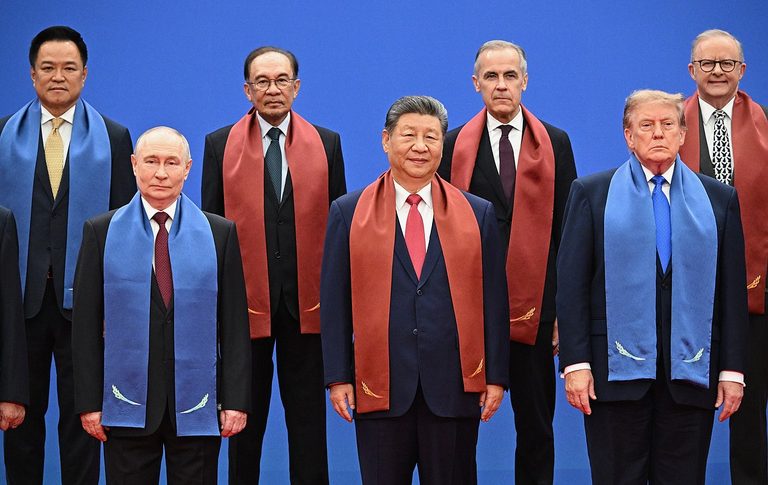
Shenzhen, China – The Asia‑Pacific Economic Cooperation (APEC) summit became a stage for President Donald Trump to showcase the United States’ economic vigor and to champion open dialogue on emerging technologies. Speaking alongside Chinese President Xi Jinping and Russian President Vladimir Putin, Trump emphasized that “too often, past leaders avoided talking to nations with whom they had disagreements. No problems are ever solved by refusing to talk about it,” and urged the group to seize the moment for constructive action.
Economic optimism from the White House
In his remarks, Trump boasted that the U.S. economy is thriving, noting recent gains in investment and job creation. He claimed the administration has helped bring “trillions of dollars of new investment” into the United States and generated “trillions in new wealth.” While the source does not provide independent verification, the President’s confidence aligns with the administration’s broader narrative of a booming post‑pandemic economy.
AI and technology policy
Trump also warned against “globalist” attempts to regulate artificial intelligence, describing such efforts as an attempt to stifle “super intelligence.” He pledged to protect American innovation and to keep the United States at the forefront of AI development. The administration’s stance reflects recent actions in Washington that tightened restrictions on remote access to advanced computer chips, a move intended to safeguard national security while preserving U.S. leadership in high‑tech fields.
Trilateral dialogue on security and trade
The historic three‑way meeting of Xi, Trump, and Putin was expected to address a broad agenda, including nuclear arms stability and ongoing conflicts in Ukraine and the Middle East. While the source does not detail specific outcomes, the presence of all three leaders underscored a willingness to engage directly on issues that have long been sources of tension.
APEC’s broader goals and economic outlook
APEC’s 21 member economies represent more than half of global business activity. International Monetary Fund Managing Director Kristalina Georgieva told the gathering that the region is growing at a 3.4% annual pace, slightly ahead of the world’s 3.1% rate. She highlighted AI’s “material impact” on global growth, noting that the technology helps offset energy‑price shocks from the Middle East conflict. Trade is expanding at a 4.6% rate, buoyed in large part by the AI investment boom.
Local relevance for Texas businesses
For Texas firms that rely on international supply chains, the APEC dialogue offers a reminder that open trade and technology cooperation remain vital. The administration’s commitment to reducing barriers and protecting American innovation aligns with the interests of Texas manufacturers, energy producers, and tech startups seeking to compete globally.
Looking ahead
Trump concluded the APEC session with a call to action: “Let’s see if we can get something done.” The President’s optimism about trade agreements and AI policy suggests that the United States will continue to push for a rules‑based international order that favors American businesses and safeguards national security.
Original reporting: Texarkana Gazette — read the source article.