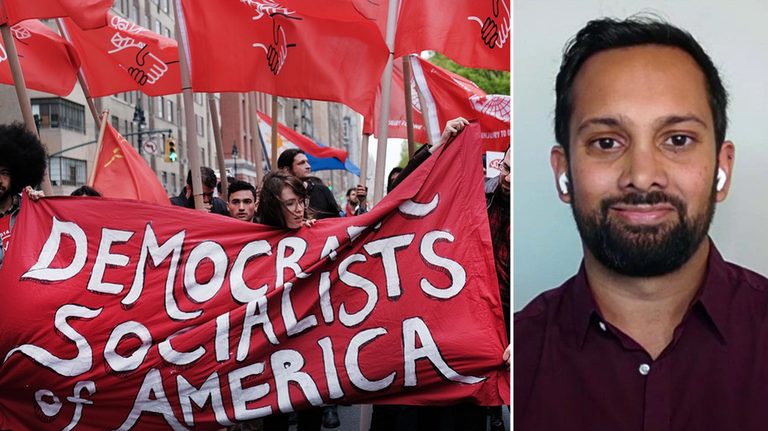
President Donald Trump signaled a rare openness to a bipartisan health‑care initiative on “Saturday in America,” describing House Minority Leader Hakeem Jeffries as a “reasonable guy” and indicating he would entertain a joint effort to expand coverage. Trump’s remarks came after the national co‑chair of the Democratic Socialists of America (DSA), Ashik Siddique, told Fox & Friends Weekend that his organization is prepared to work with the administration to pass a Medicare‑For‑All system.
DSA’s Call for Cooperation
Siddique emphasized that universal health coverage should “transcend party lines,” arguing that a tax‑funded plan would shift the burden from private premiums and employer contributions to a more straightforward tax structure. He said, “Right now, you are paying out of your pocket or your employer’s paying out of pocket. It’s being taken out of your paycheck. If that came out of your taxes instead directly, you would end up saving money for a health‑care system that is universal and publicly provided.”
Trump’s Response
When asked about the proposal, Trump acknowledged that both parties have strengths and weaknesses but suggested there is “a chance we could get great health‑care and a lot of other things, and we do it in a bipartisan way.” He framed the potential deal as an opportunity to address a long‑standing American concern while preserving the administration’s broader agenda.
Cost Estimates and Fiscal Debate
The White House Council of Economic Advisers has projected a ten‑year cost of roughly $47 trillion for a full Medicare‑For‑All rollout. Siddique countered that the shift from private insurance premiums to taxes would ultimately leave Americans ahead financially, though the exact savings remain a point of debate among economists.
Political Context
The discussion occurs as House Democrats, led by Jeffries, outline a series of priorities for their first 100 days, including restoring Medicaid, extending ACA tax credits, and addressing other social‑program funding. While the DSA’s 135,000 members across more than 200 chapters have not yet endorsed a specific candidate for the 2028 presidential race, they are weighing options and have expressed enthusiasm for a candidate who can channel public concern about the nation’s direction.
Implications for the Nation
If a bipartisan agreement were reached, it could reshape the health‑care landscape by moving the United States toward a single‑payer model funded through taxes. Supporters argue this would simplify billing, reduce administrative overhead, and provide consistent coverage for all citizens. Critics warn of the massive fiscal commitment and potential tax increases required to sustain such a system.
President Trump’s willingness to entertain the proposal reflects a strategic effort to demonstrate bipartisan leadership and address a core issue that resonates with families across the country. The administration’s next steps will likely involve detailed negotiations with congressional leaders and stakeholder groups to determine the feasibility of a tax‑based universal health‑care plan.
Original reporting: Fox News (HLL/CB) — read the source article.