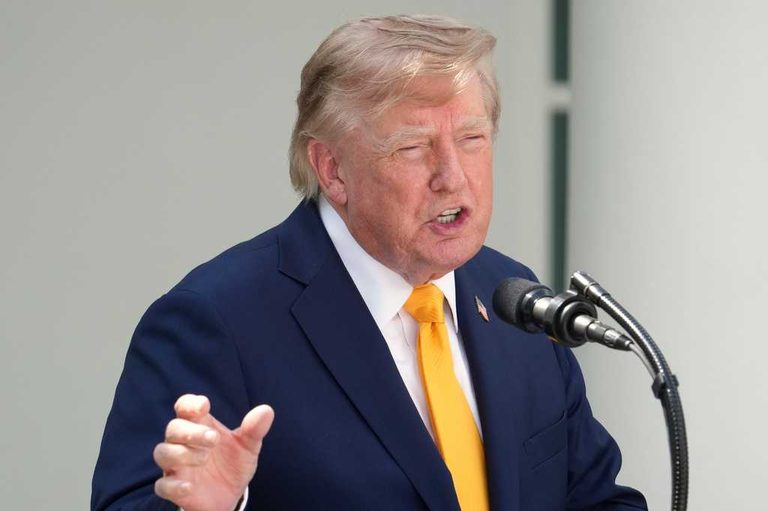
President Donald Trump announced on Tuesday that he is seriously considering renaming Lake Ontario to “Lake America.” The proposal comes as the United States and Canada intensify a trade dispute that began last weekend when the Trump administration imposed 50% tariffs on $20 billion of Canadian imports.
Trade measures and retaliatory threats
Canada is expected to unveil retaliatory steps on Tuesday, following the U.S. move that targets Canadian automobiles, auto parts, steel and aluminum. Prime Minister Mark Carney warned that Washington’s demands aim to “destroy our major industries,” including the auto sector that is a cornerstone of Ontario’s economy.
Trump told Canadian leaders on Monday to “fall in line” or face consequences “far worse” than the existing tariffs. He added on social media that the name change reflects the expectation that the United States will no longer do much business with Ontario.
Impact on local families and businesses
Michigan furniture maker Michael Howard II, who runs a family‑owned shop in Warren, said the tariffs threaten his ability to provide for his family and support the community. “To say we don’t need Canada is disingenuous,” Howard said. “We need our neighbor, and they need us.”
Howard’s comments illustrate how the trade fight could raise prices for everyday goods, affecting families across the Great Lakes region.
Government responses
Canada’s finance minister, François‑Philippe Champagne, and three other cabinet members are slated to announce support measures for workers impacted by the tariffs. Carney indicated Canada may shift from matching U.S. tariffs dollar‑for‑dollar to more targeted retaliation aimed at protecting Canadian jobs.
“An attitude at the negotiation table that Canada is a subsidiary of the United States is not something we’re going to accept,” Carney said.
Broader economic considerations
The United States and Canada share one of the world’s largest trading relationships, with integrated supply chains in autos, energy, agriculture and manufacturing. Prolonged conflict could disrupt these networks, raising costs for businesses and consumers on both sides of the border.
While the name‑change idea is symbolic, it underscores the heightened rhetoric and the potential for further policy actions that could reshape cross‑border commerce.
Original reporting: WPBF West Palm Beach — read the source article.