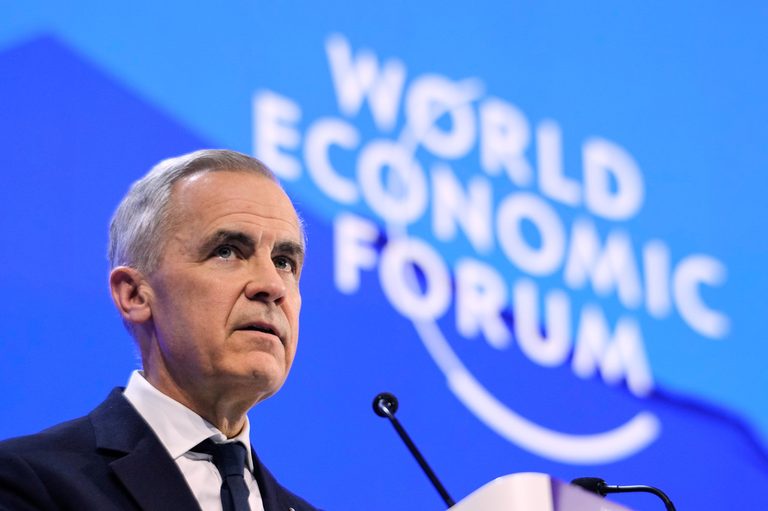
President Donald Trump escalated the trade dispute with Canada on Saturday by imposing 50% tariffs on roughly $20 billion worth of Canadian goods entering the United States. The move follows a breakdown in negotiations in which Canadian Prime Minister Mark Carney said the United States demanded excessive concessions in exchange for tariff relief.
Canada’s response
In reaction, Carney announced that Canada will implement a dollar‑for‑dollar retaliation beginning Sept. 8, matching the value of the U.S. duties. “We’re going to hit back,” Carney said, emphasizing that middle‑power nations must resist economic pressure from larger powers, even at a cost.
Political and sovereignty implications
Carney framed the dispute as a test of Canadian sovereignty. He warned that Washington had introduced language in the final hours of talks that would have limited Canada’s ability to negotiate trade deals with other countries, calling the demand “unacceptable” and a direct challenge to national sovereignty. British Columbia Premier David Eby echoed the concern, saying such a condition would reduce Canada to the “economic equivalent of the 51st state.”
Trump’s stance
Trump responded by reminding Carney that Canada’s economy is heavily dependent on the United States, stating, “Canada lives because of the United States. Remember that, Mark, the next time you make your statements.” He reiterated his long‑standing rhetoric about making Canada the 51st state and accused Canada of charging U.S. farmers “massive amounts” in tariffs for years.
Economic realities
Canada’s reliance on the U.S. market is stark: nearly three‑quarters of Canadian exports go to the United States, whose economy is roughly ten times larger. While Canada can pursue new trade agreements, replacing the deep‑rooted supply chains built around the U.S. market would be a lengthy and costly process. Carney acknowledged that retaliation would “raise costs and reduce choice for Canadians.”
U.S. perspective
U.S. Trade Representative Jamieson Greer rejected Canada’s account of the negotiation breakdown, claiming Ottawa introduced new demands and backed away from commitments even after Washington offered to reduce tariffs on steel, autos, lumber and other goods. Greer indicated that the United States is moving forward with additional measures in response to Canada’s retaliation, raising the prospect of further escalation.
Expert commentary
Historian Robert Bothwell noted that Canada is uniquely vulnerable to U.S. pressure, saying, “No country is more exposed than Canada.” Political scientist Nelson Wiseman called the dispute the biggest test yet of whether Carney’s strategy of standing firm can succeed and whether other middle powers might follow suit. Eurasia Group president Ian Bremmer warned that many Canadians are angry with the Trump administration, describing the hard‑line stance as popular among the public.
Public reaction
Public sentiment has manifested in recent sports events, with fans in Vancouver and Montreal booing the U.S. national anthem before Major League Soccer matches. Manitoba Premier Wab Kinew cautioned that the confrontation could last two years, suggesting that the United States may emerge weaker after the upcoming midterm elections.
Looking ahead
Carney reiterated his earlier warning that America seeks to “break us so that they can own us,” promising that Canada will not surrender its independence. The next weeks will reveal how far each side is willing to go and whether the dispute will reshape trade dynamics for other U.S. allies.
Original reporting: KTSA News/Talk (San Antonio) — read the source article.