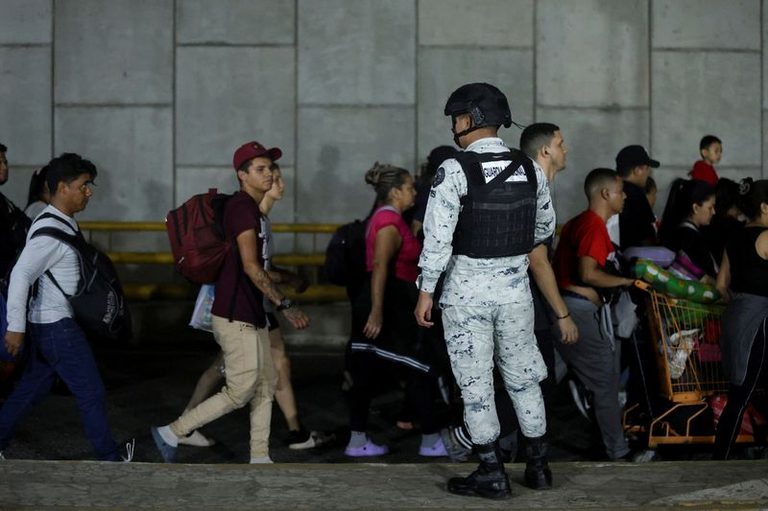
Ciudad Juárez, Mexico – The once‑busy migrant shelters that dotted the Mexican side of the U.S. border are now nearly vacant. A sharp decline in arrivals follows President Trump’s aggressive immigration enforcement and the abrupt shutdown of the CBP One app, which had allowed asylum seekers to schedule appointments at U.S. ports of entry.
Local families stay put
Salomé Villena, an Ecuadorian mother of two, had planned to cross the border with her husband and children, ages four and six. “Our intention was to cross into the United States, but because of what Trump did, we couldn’t,” she said, referring to the new policies that have made legal pathways to the U.S. far more difficult.
The Villenas considered paying a smuggler, but abandoned the plan after the man began stealing their money. Instead, they remain in Ciudad Juárez, now among the few residents still occupying a local shelter.
Shelters see record low occupancy
Juan Fierro, director of the city’s Good Samaritan shelter, confirmed that the number of new arrivals has “sharply reduced” since the Trump administration’s crackdown. “It’s becoming increasingly complicated and difficult for people to reach Mexico’s northern border and cross into the United States,” he explained.
Municipal officials had prepared for a surge in deportees by opening emergency shelters, but the facilities remain largely empty. Many deportations are now conducted by air, sending migrants to southern Mexico or other countries rather than through the traditional overland routes.
Changing demographics
Dirvan García of the state population council, Coespo, noted a dramatic shift in the city’s migrant makeup. “We are living something completely different,” he said. While the shelter network has been cut nearly in half – now operating 18 locations – occupancy hovers around 15 percent, with the majority of residents now being Mexican citizens displaced by violence.
Those who are not Mexican tend to be from Venezuela, Colombia and Central America. The reduced flow of new migrants has also lessened pressure on local resources, allowing the city to focus on supporting displaced Mexican families.
Policy impact and local response
The Trump administration’s decision to terminate the CBP One app removed a key legal channel for asylum seekers, effectively curbing the pipeline of migrants who previously used the program to schedule entry appointments. While the policy aims to deter illegal crossings, it has also produced unintended humanitarian consequences for border‑side communities.
Local leaders stress the importance of balancing border security with compassion for those forced to flee violence. “We must uphold the rule of law while also caring for families who find themselves stranded,” García added.
Looking ahead
As the Trump administration continues its immigration enforcement agenda, Ciudad Juárez officials anticipate that shelter occupancy will remain low unless new migration pressures emerge. For families like the Villenas, staying in the city offers stability amid a shifting policy landscape.
Community groups are stepping in to provide assistance, emphasizing the city’s tradition of hospitality and the resilience of its residents. The situation underscores how federal policy decisions reverberate far beyond the U.S. border, shaping daily life in neighboring Mexican towns.
Original reporting: Appleton, WI News Feed (HLL/CB) — read the source article.