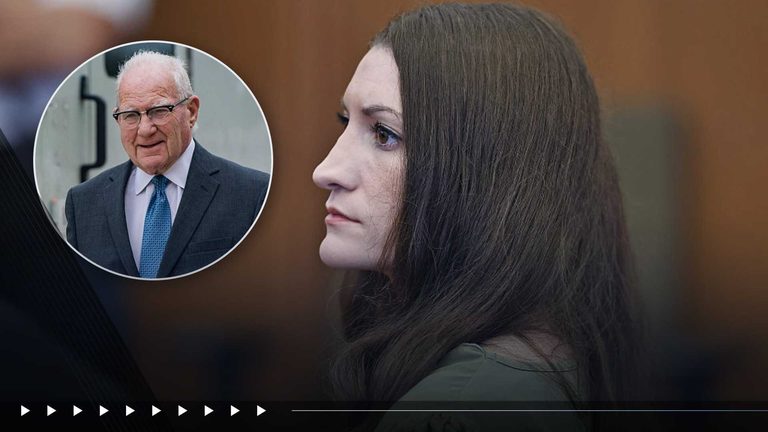
When defense lawyer Kevin Reddington appeared on Good Morning America on Tuesday, he used the national platform to urge President Trump to intervene in the high‑profile murder case of Massachusetts mother Lindsay Clancy. Reddington asked the president to consider a pardon, citing the defendant’s personal circumstances and the tragic loss of her three children.
Legal limits on a presidential pardon
Legal scholars quickly pointed out that a presidential pardon can only address federal crimes. Clancy is charged with murder under Massachusetts state law, and no federal indictment has been filed against her. As a result, even if the president were inclined to act, the Constitution does not grant him authority to erase a state conviction or halt a state‑level retrial.
Trump’s response and his pardon record
President Trump responded to the media’s inquiries on Friday, describing the case as a “horrible tragedy” and acknowledging the gravity of the alleged act. He warned that the defendant would face a serious penalty, whether that be a mental‑health facility or incarceration.
Since the start of his second term, President Trump has issued more than 100 individual pardons, a number that reflects his willingness to use executive clemency to correct perceived injustices. Notably, in December he granted a pardon to former Colorado election clerk Tina Peters, whose state conviction was later commuted by Governor Jared Polis. While that case involved a state conviction, the president’s pardon was symbolic and did not carry legal weight to overturn the state sentence.
Defense strategy and the mistrial
Reddington argued that Clancy suffered from postpartum psychosis at the time of the alleged killings, a claim that could influence a jury’s assessment of criminal responsibility. The first trial ended in a mistrial after the jury deadlocked 11‑1, with one juror refusing to convict. A retrial is expected this fall.
Although Clancy has not contested the factual finding that her children died, her defense team maintains that mental‑health considerations should mitigate criminal liability. The request for a presidential pardon, however, remains largely symbolic given the jurisdictional constraints.
What this means for the case
Even without a federal pardon, the president’s public comments may shape public perception and could indirectly affect the political climate surrounding the case. Critics of the request argue that a pardon would set a dangerous precedent, allowing a president to intervene in state criminal matters. Supporters contend that the president’s moral authority can bring attention to mental‑health issues that often go unaddressed in the criminal justice system.
For now, the legal process will continue under Massachusetts law, and the upcoming retrial will determine whether Clancy faces incarceration, a mental‑health commitment, or another outcome.
Background on presidential clemency
The Constitution grants the president the power to grant reprieves and pardons for offenses against the United States, but it does not extend to state crimes. This separation of powers ensures that state courts retain authority over violations of state statutes, preserving the balance between federal and state jurisdictions.
As the case proceeds, observers will watch both the legal arguments surrounding postpartum psychosis and the broader conversation about the limits of executive clemency.
Original reporting: 40/29 / KHBS (NW Arkansas) — read the source article.