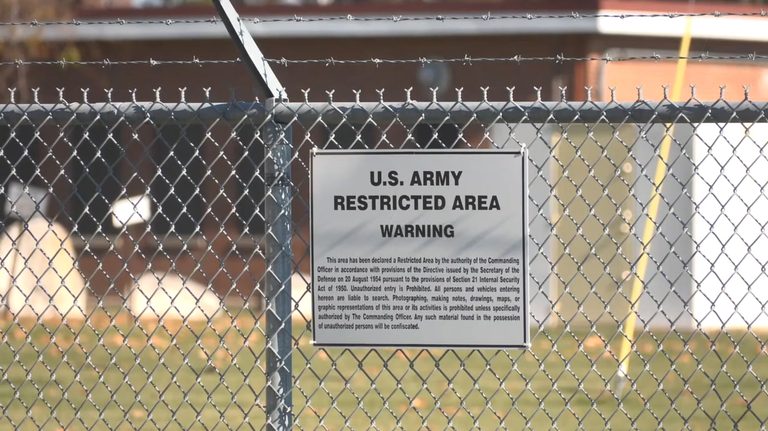
The 8th Circuit U.S. Court of Appeals has cleared the U.S. Army to detonate dozens of barrels of degraded lead‑azide at the Iowa Army Ammunition Plant in southeastern Iowa. While the court’s decision removes a legal hurdle, President Trump has instructed the military to hold off until both the court and Governor‑Elect Rob Sand explicitly approve the plan.
Trump’s safety‑first directive
In a Truth Social post on Monday, President Trump said he ordered the military not to proceed without a final court ruling and warned that the incoming governor would be held responsible for any harm that might result. “I feel the proper course is to get rid of this long‑term problem, but I have ordered the military not to do so until the Eighth Circuit agrees we can go forward, and I am making this decision fully subject to Governor‑Elect Rob Sand agreeing to the operation,” Trump wrote.
The president added that if Sand or the courts do not consent, the administration will have no choice but to pause the detonation, and he would hold the governor accountable for “any and all death or destruction caused by this very unfortunate, and long‑term, situation.”
Governor‑Elect Sand pushes for transparency
Rob Sand responded that the decision should be based on the expertise of the scientists and engineers already on the ground in Middletown. “Iowans are entitled to know how Middletown came to this situation and why the administration believes this is the best path forward,” Sand said. He urged the federal government to share briefing materials with the public as soon as possible.
Expert concerns and local reactions
Patrick O’Shaughnessy, a professor of occupational and environmental health at the University of Iowa, called the operation “extraordinary” and warned that releasing a persistent pollutant could create an immediate human‑health hazard and a long‑lasting environmental legacy. “There has to be better coordination… It’s going to be an immediate human health hazard from inhaling it, then it will live in the environment for a long, long time,” he said.
U.S. Senator Chuck Grassley called for clear communication and a controlled removal, describing the situation as “life‑or‑death.” He emphasized that a controlled detonation is the safest method to eliminate the hazard and urged rapid public notification so Iowans can plan accordingly.
Neighboring states watch closely
Missouri Governor Mike Kehoe said his administration is focused on keeping Missourians informed and prepared, though he noted his team is not currently concerned about cross‑state impacts. Iowa Governor Kim Reynolds has posted a resource website but has not issued a public statement.
Legal backdrop and next steps
The appeals court’s order follows a series of legal challenges that have delayed the operation three times after public outcry over potential health and environmental effects. The Army had originally slated the detonation for last Friday, then moved it to a Wednesday when weather appeared most favorable.
Environmental group Earthjustice, which sued over the EPA’s emergency permit, praised the court’s decision but reminded the public that the Army created the emergency through neglect. The group urged the Army to provide more information and additional safeguards for residents.
With the court’s green light and President Trump’s safety‑first directive, the next decisive step rests on Governor‑Elect Sand’s review of the technical briefings. Iowans await a transparent explanation and a timeline that prioritizes health, safety, and responsible stewardship of the environment.
Original reporting: KMTV 3 News Now (Scripps) – local — read the source article.