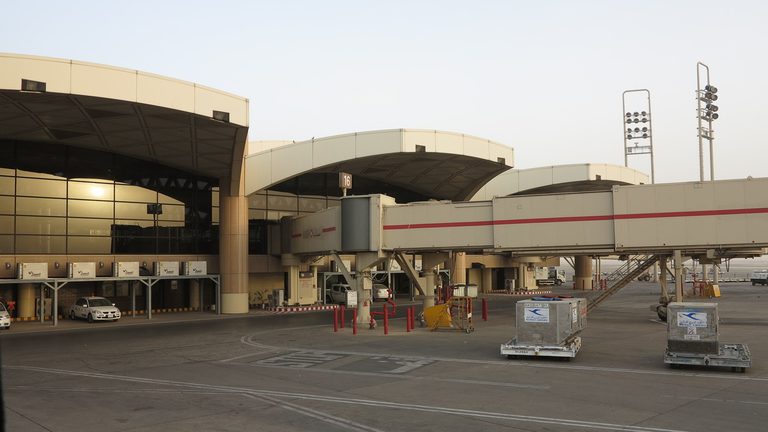
A fresh projectile struck Terminal 4 at Riyadh’s King Khalid International Airport on Sunday, October 11, igniting a fire and adding to the devastation from the missile attack the day before. Saudi officials confirmed the hit but did not release an injury count.
The earlier strike on Saturday killed 12 people, including an American citizen, and wounded more than 300, according to Saudi authorities. An Indian citizen later died of injuries, bringing the total death toll to 13, as reported by India’s embassy.
Houthi military spokesperson Yahya Saree claimed responsibility for the Saturday attack and said the group also targeted Dammam’s airport and two Saudi Aramco facilities. Saudi aviation officials later confirmed a separate attack on King Fahd International Airport in Dammam on Sunday evening.
President Donald Trump addressed the situation on Saturday, stating that his administration was reviewing the latest attack and weighing the possibility of joining Saudi strikes against the Houthis. He did not announce a final decision, and the White House declined to comment further on Sunday.
The Federal Aviation Administration issued a warning to U.S. airlines, urging crews to exercise caution when flying to or over Saudi Arabia because of ongoing military activity and potential interference with navigation systems. The FAA noted that threats could affect aircraft at all altitudes, including overflight, arrival, and departure phases.
Riyadh’s airport remains closed through at least 4 p.m. Central Time on Monday, October 12, as authorities assess damage and ensure safety for passengers and staff.
U.S. Policy Context
The United States has previously employed sanctions against Houthi financing and weapons procurement networks. Treasury targeted 32 individuals and entities in a September 11, 2025 action, a campaign previously covered by the Dallas Express.
While the Trump administration has not yet committed to direct military involvement, the President’s public consideration of U.S. strikes signals a willingness to support Saudi Arabia’s campaign against the Houthis, which the Saudi‑led coalition has intensified in recent months.
Regional Implications
The renewed attacks underscore the volatile security environment along the Red Sea coast, where Yemeni government forces, backed by Saudi Arabia, continue to push back Houthi advances. The Houthis have repeatedly targeted Saudi infrastructure, aiming to pressure the coalition and draw international attention to their cause.
Analysts note that any escalation involving U.S. forces could broaden the conflict and affect commercial aviation routes, potentially raising insurance costs and prompting airlines to adjust schedules.
What Residents Should Know
Travelers planning to fly to Saudi Arabia should monitor airline advisories and consider alternative routes where possible. The FAA’s notice advises heightened vigilance for all phases of flight over the region.
For families with members serving in the armed forces, the President’s statement reflects an ongoing commitment to protect American lives abroad while balancing diplomatic considerations.
Original reporting: WBAP News/Talk (Dallas-Fort Worth) — read the source article.