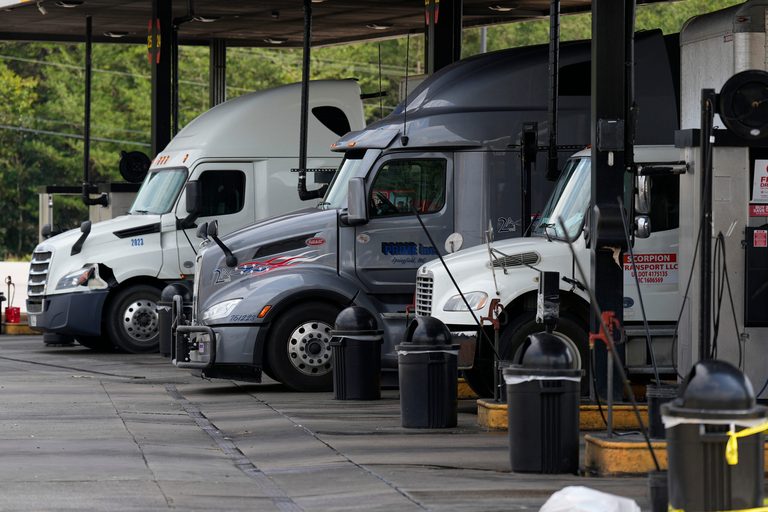
Diesel fuel, a lifeline for America’s heartland, has surged to a record $6.52 per gallon, a 73% increase since the conflict with Iran began. The spike is hitting farmers, truckers and small‑business owners across the nation.
Republican leaders demand export halt
Republican candidates in key states such as Iowa and Michigan have urged an immediate end to diesel exports, arguing that keeping more fuel at home will lower domestic prices. President Donald Trump has publicly supported the idea, saying he has “called for that too,” while Energy Secretary Chris Wright cautioned that a “blanket ban” is not under discussion.
Economic impact on everyday Americans
Joseph Brusuelas, chief economist at RSM, warned that diesel price hikes affect everything from groceries to school bus routes. “The price of diesel touches everything in our economy that needs to move,” he said.
Small‑business lender Cardiff’s CEO William Stern noted that the sudden jump from under $6 to over $6.50 per gallon in just two weeks is crushing budgets for both large and small enterprises.
Policy debate within the GOP
The proposal has split Republicans. Senate Majority Leader John Thune said he is open to the idea, while Senator Chuck Grassley championed it, posting on social media, “If you can embargo chips, you can embargo diesel.” Rep. Ashley Hinton, a Senate hopeful in Iowa, called the war’s cost an unfair burden on Iowans and urged the use of every option to provide relief.
Administration’s stance
President Trump reiterated his support for curbing exports, but Treasury Secretary Scott Bessent emphasized that the administration is still exploring all avenues to bring diesel prices down. Energy Secretary Wright told a climate conference in New York that a full export ban is not being discussed.
Industry warnings
The American Petroleum Institute warned that an export ban could actually raise diesel prices for most Americans. S&P Global Energy’s Debnil Chowdhury explained that stopping exports would create a surplus at refineries, forcing them to store excess fuel or cut production, which could push up prices for gasoline and jet fuel as well.
Energy economist Phil Verleger, who advised the federal government during the 1970s oil shock, said a ban might lower diesel prices but would carry “terrible economics” and could threaten the long‑term health of the U.S. fossil‑fuel industry.
Broader geopolitical context
The price surge is tied to the Middle‑East war that began in February, which has taken roughly 20% of the world’s oil off the market by closing the Strait of Hormuz. Additional attacks on Russian refineries by Ukraine have removed up to 1 million barrels of diesel per day from global supply.
While Democrats are using the diesel crisis to criticize the war and the administration, Republican leaders argue that protecting American families and farms from foreign market volatility is a core responsibility of the government.
Looking ahead
Economists agree that any export restriction must be carefully weighed against potential knock‑on effects on the broader fuel supply chain. The administration continues to evaluate policy tools that could ease the pain without jeopardizing the United States’ role as a reliable diesel supplier to the world.
Original reporting: Alexandria, VA News – WTOP News — read the source article.