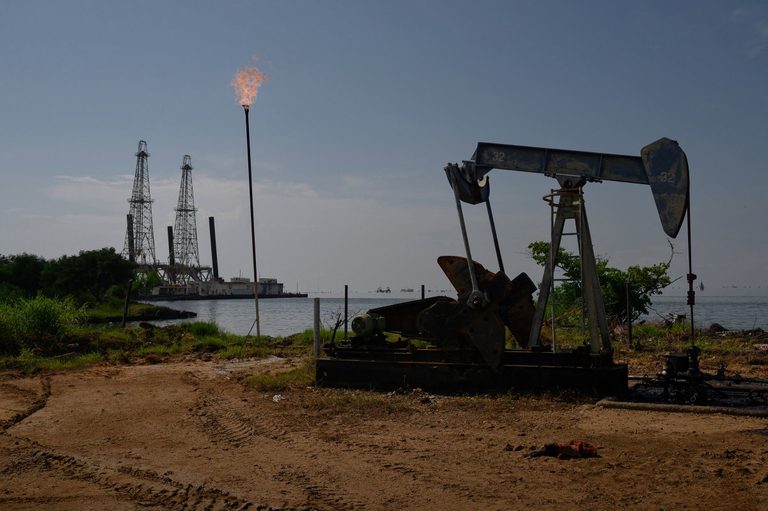
President Donald Trump announced Friday night that the United States has concluded a landmark oil agreement with Venezuela. In a social‑media post, Trump said the deal, negotiated by Secretary of State Marco Rubio and Secretary of War Pete Hegseth in partnership with Venezuela’s interim president Delcy Rodriguez, gives the United States majority control of more than 65 billion barrels of proven oil reserves in the South American nation.
Trump framed the agreement as a “historic transaction” that will more than double America’s oil reserves, increase the nation’s overall oil supply and drive down gasoline prices for American families for years to come. He added that the deal will help set Venezuela on a path toward “tremendous success and great prosperity,” while strengthening the bilateral relationship between the two countries.
Administration’s view
Secretary of State Marco Rubio called the arrangement “a huge win for both the American and Venezuelan people.” Rubio said the partnership is expected to bring nearly $100 billion in private investment to Venezuela, create thousands of high‑paying jobs and support the reconstruction of the Venezuelan economy.
The administration emphasized that the agreement was reached at no cost to the American taxpayer, positioning it as a fiscally responsible step that leverages private‑sector capital to secure strategic energy assets abroad.
Implications for U.S. energy security
By securing a controlling stake in Venezuela’s vast oil fields, the Trump administration aims to reduce U.S. dependence on less stable sources of supply and to insulate the domestic market from geopolitical shocks. Officials argue that the added reserves will provide a strategic buffer, ensuring a steady flow of crude to refineries and helping to keep gasoline prices low for consumers.
Energy analysts note that while the deal expands U.S. access to foreign oil, the actual impact on domestic fuel prices will depend on a range of factors, including global oil market dynamics, production levels in the United States and the speed at which private investors can develop Venezuelan fields.
Political context
The announcement comes amid ongoing debates in Washington over the best approach to energy policy, national security and foreign relations with authoritarian regimes. Supporters of the deal argue that it demonstrates a pragmatic, America‑first strategy that puts U.S. interests first while offering economic relief to a struggling neighbor. Critics warn that deepening ties with Venezuela could raise concerns about governance, human‑rights standards and the long‑term stability of the partnership.
Regardless of the political discourse, the administration presented the agreement as a concrete example of President Trump’s commitment to strengthening the nation’s energy independence, protecting families from volatile fuel costs and fostering economic growth both at home and abroad.
Original reporting: KRDO (Colorado Springs metro) — read the source article.