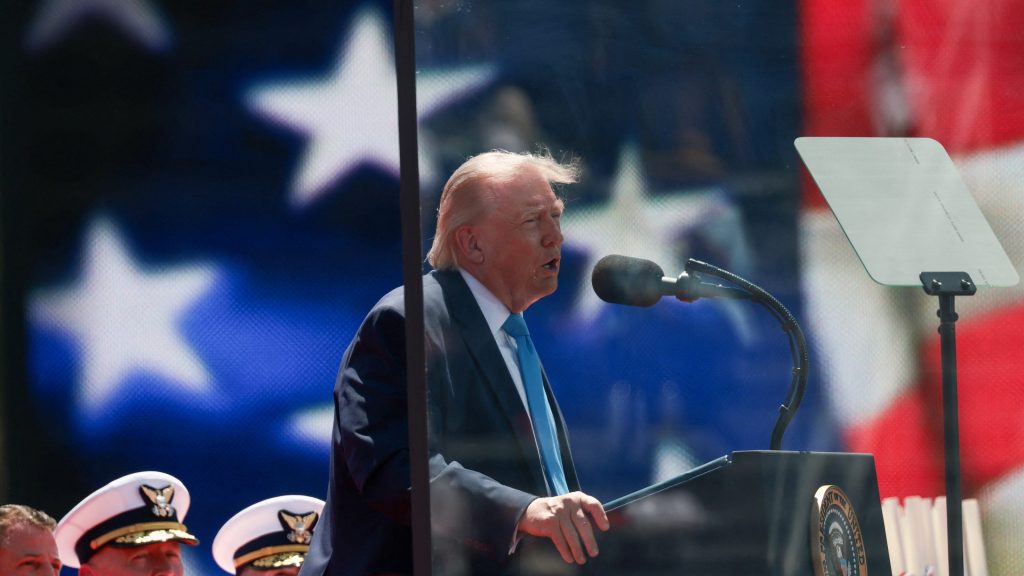
President Donald Trump has announced significant progress in negotiations to end the ongoing conflict between the United States and Iran. In a recent social media post, Trump stated that a peace agreement has been ‘largely negotiated,’ with only final details remaining to be settled. This development follows weeks of diplomatic talks aimed at transforming a temporary ceasefire into a lasting peace.
Regional and Global Impact
The discussions have involved key regional leaders from countries including Pakistan, Saudi Arabia, the United Arab Emirates, Qatar, Egypt, Turkey, Jordan, and Bahrain. Trump also held separate talks with Israeli Prime Minister Benjamin Netanyahu. A crucial component of the agreement is the reopening of the Strait of Hormuz, a vital channel for global oil shipments that Iran had previously threatened to block, causing economic disruptions worldwide.
The ceasefire, which began on April 7, has been fragile, with both U.S. and Iranian forces engaging in sporadic strikes. President Trump had indicated a willingness to resume military action if a satisfactory deal could not be reached, describing the likelihood of a ‘good’ deal as a ‘solid 50/50.’
Nuclear and Economic Concerns
One of the key sticking points in the negotiations has been Iran’s nuclear ambitions. The Trump administration has insisted that Iran must disavow any efforts to develop nuclear weapons and relinquish its enriched uranium. Iran, however, maintains that its nuclear program is for civilian purposes and has demanded the lifting of U.S. sanctions and the end of the blockade on its ports.
Secretary of State Marco Rubio, speaking from India, reiterated these demands, emphasizing that Iran must never possess nuclear weapons and that the Strait of Hormuz should remain open without tolls. Meanwhile, Iran’s Fars news agency has reported that the agreement would allow Iran to manage the strait, contradicting Trump’s assertion that a deal is nearly finalized.
Ongoing Negotiations
Negotiations have been ongoing, with Vice President JD Vance playing a key role by engaging directly with Iranian officials in Pakistan. Despite the progress, Iranian Foreign Ministry spokesperson Esmail Baghaei has indicated that some issues remain unresolved and will require further mediation in the coming days.
The outcome of these negotiations could have significant implications not only for U.S.-Iran relations but also for the broader Middle East region, particularly in light of Israel’s ongoing conflict with Lebanon. As the situation develops, the world watches closely to see whether a lasting peace can be achieved.
Original reporting: Las Cruces Sun News (HLL/CB) — read the source article.