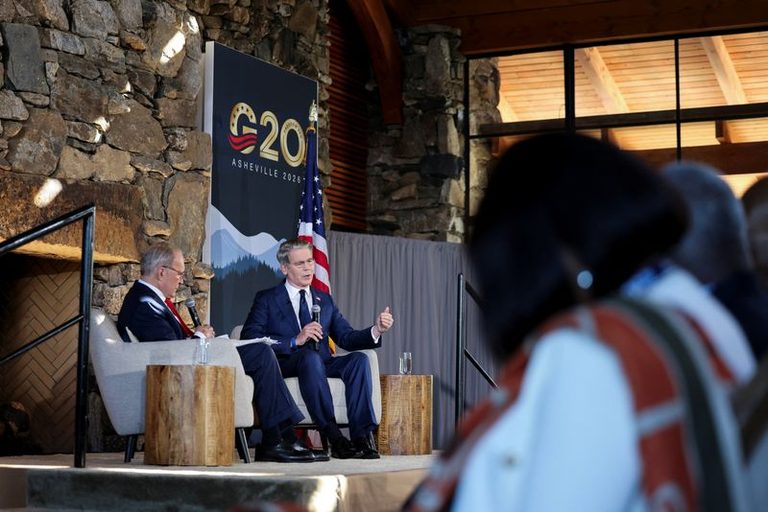
At a G20 meeting in Asheville, North Carolina, the Trump administration pressed fellow members to find ways to reduce global trade and fiscal imbalances. Treasury Secretary Scott Bessent told Reuters the United States would urge the bloc to re‑examine its terms of trade with China and consider higher trade barriers on Chinese goods. The goal, he said, is to push Beijing toward a more balanced economy that relies less on exports and more on domestic consumption.
Bond market turbulence adds urgency
A sharp sell‑off in global bond markets on Tuesday heightened worries about rising debt levels and renewed inflation pressures. Japan’s 10‑year bond yield rose to 3% for the first time since 1996, while yields in the United States, the euro zone, Germany and Britain also climbed. The market anxiety reflects concerns over energy‑driven inflation, potential monetary tightening and worsening fiscal conditions worldwide.
China’s export surge under scrutiny
China’s massive export push continues to strain economies around the world. In July, Chinese exports rose 23.9% year‑on‑year, driven by electric vehicles, semiconductors and other high‑tech goods. The United States has already imposed high tariffs on many Chinese products and outright bans on items such as Chinese‑manufactured vehicles. European officials have also called for tougher curbs on Chinese imports, noting a growing trade surplus with the EU.
Polish Finance Minister Andrzej Domanski echoed the U.S. view, describing China’s trade surplus as a major problem and highlighting steps the EU is taking, including customs duties on e‑commerce parcels from China. He warned that an undervalued yuan and aggressive export subsidies are harming European markets.
Challenges within the G20
Reaching consensus on a joint communique addressing global imbalances proved difficult. China resisted any language singling out “non‑market economies” or imposing firm limits on critical mineral exports. Japan’s Finance Minister Satsuki Katayama warned that arbitrary export restrictions on rare earths and other critical minerals hurt the global economy and should be lifted.
European Economy Commissioner Valdis Dombrovskis stressed that all economic blocs must act to correct imbalances, noting that the United States needs to reduce its own fiscal deficits while the EU should increase investment. He described a balanced growth agenda as essential for every region, including China.
U.S. fiscal picture
Economists note that the United States has yet to present a comprehensive plan to cut its excessive fiscal deficits, a key step in lowering its $1 trillion‑plus annual global trade deficit. The Trump administration’s push at the G20 reflects a broader strategy to address both domestic fiscal responsibility and external trade pressures.
Broader geopolitical context
European ministers also sought stronger language condemning Russia’s war in Ukraine. The presence of Russian Finance Minister Anton Siluanov at the G20 table surprised many, marking the first time Russia attended in person since its 2022 invasion.
Overall, the Trump administration’s effort to rally G20 partners around trade‑balance reforms underscores a commitment to protecting American workers, supporting fiscal prudence, and encouraging a more equitable global economic order.
Original reporting: Appleton, WI News Feed (HLL/CB) — read the source article.