The U.S. Southern Command confirmed on Monday that a joint task force sank a floating refueling station operating in the Eastern Pacific that was linked to the criminal organization Los Choneros. The vessel, whose name has not been released, was the fifth Ecuadorian boat targeted by U.S. forces in less than two weeks, underscoring the Trump administration’s aggressive stance against drug‑trafficking networks that threaten American families.
Precise, professional action
According to a statement from Southern Command, the operation was “precise and professional,” aimed at dismantling the logistical networks that fuel drug trafficking in the Western Hemisphere. A video released by the command shows military personnel boarding the ship, a helicopter circling overhead, and a projectile striking the hull, causing the vessel to sink.
Humanitarian handling of crew
The statement also emphasized that all individuals on board were safely removed and will be transferred to Ecuadorian authorities for due process. This humane approach reflects the administration’s commitment to respecting the rule of law while protecting U.S. citizens from the scourge of narcotics.
Recent string of successful strikes
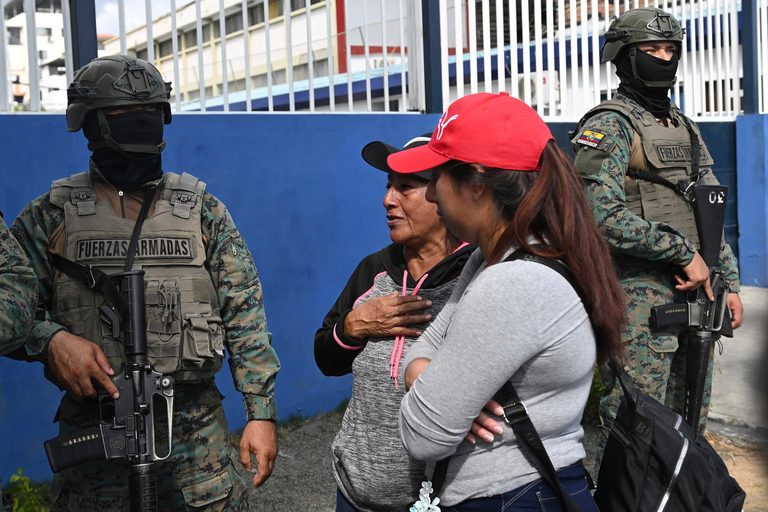
In the past two weeks, U.S. forces have targeted four other vessels believed to support illicit drug operations. The fishing vessel María Candelaria was struck last week, and its 26 crew members were later located by the Ecuadorian navy and taken to the port city of Manta. Eight fishermen from the vessel Conquista II were also recovered, while families on the mainland continue to seek information about their loved ones.
Other identified targets include the OM2 and Los Tres Hermanos, both described by Southern Command as floating refueling stations for multiple drug‑running boats. The United States has consistently labeled Los Choneros a foreign terrorist organization, reinforcing the national security justification for these actions.
Broader regional cooperation
President Trump’s administration is expanding its partnership with allied nations to extend counter‑narcotics operations onto land throughout Latin America. During a recent visit to Panama, Defense Secretary Pete Hegseth announced that Colombia, Guatemala and Honduras have agreed to allow joint U.S. military operations against criminal groups on their soil. While Guatemala later denied finalizing such a deal, the administration’s diplomatic outreach demonstrates a comprehensive strategy to cut off drug supply chains at every point.
Critics and legal questions
Critics have raised concerns about the legality and effectiveness of sinking civilian vessels, noting that at least 227 people have been killed in 68 U.S. government strikes against boats in the Caribbean and Pacific since the campaign began more than a year ago. Some Ecuadorian officials have said they lack evidence that certain survivors were involved in criminal activity. Nonetheless, the administration maintains that these precise strikes are necessary to protect American families from the devastation of opioid and other narcotics.
Looking ahead
The Trump administration says it will continue to conduct targeted operations against drug‑trafficking logistics, working closely with regional partners to ensure the safety of both American and Latin American communities. As the campaign progresses, officials stress the importance of transparency, accountability, and respect for international law while pursuing a decisive end to the drug trade that has long plagued neighborhoods across the United States.
Original reporting: Alexandria, VA News – WTOP News — read the source article.