The Trump administration is moving forward with a repeal of federal rules that limit greenhouse‑gas emissions from coal‑ and gas‑fired power plants. The Environmental Protection Agency (EPA) says the change will make electricity cheaper for American families and businesses.
Administration’s savings estimate
EPA officials project economy‑wide cost savings of $310 billion from 2026 to 2047 by avoiding spending on carbon‑capture equipment and by allowing new natural‑gas plants to run more often without additional emissions controls. The agency also projects that the national average price of electricity will be about 5.8 percent lower in 2035 than it would be if the rules remained in place. For a typical home or business using 1,000 kilowatt‑hours per month, that translates to roughly $8 less per month on the power bill.
Why the administration supports the repeal
President Trump and EPA leaders argue that Section 111 of the Clean Air Act does not give the agency authority to regulate power‑plant greenhouse‑gas emissions for climate‑change purposes. By rolling back the rules, the administration says it is preventing future agencies from reinstating what it views as overreaching regulations that raise costs for consumers.
Local impact on power plants
Keeping older coal plants online and encouraging new natural‑gas construction can help meet rising electricity demand driven by data‑center growth, electrification of transportation, and other uses. While coal plants often cost more to operate than new gas plants, the repeal removes the financial burden of installing carbon‑capture technology, making both continued coal operation and new gas‑plant projects more financially attractive.
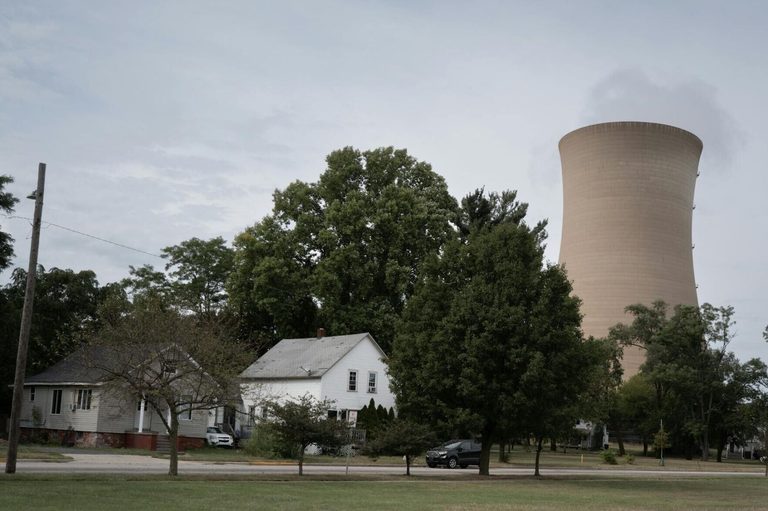
One concrete example is the J.H. Campbell coal plant on the eastern shore of Lake Michigan. Consumers Energy had planned to retire the plant in May 2025 and replace it with a natural‑gas facility and expanded solar generation, estimating $600 million in customer savings through 2040. However, the Department of Energy ordered the plant to remain operational to protect grid reliability, extending the order through November 2026. The plant’s latest quarterly filing shows a net cost of $259 million to keep it running from May 2025 through June 2026, above the $239 million in market revenues it earned.
Health and climate costs not counted
EPA’s $310 billion savings figure does not include the health and climate damages associated with higher emissions. Burning fossil fuels releases fine particles and ground‑level ozone that increase risks of heart and lung disease, premature death, and missed work or school. The agency’s own 2025 analysis estimated that these additional health impacts could cost $130 billion from 2026 to 2047.
Greenhouse‑gas emissions also accelerate climate change, threatening infrastructure, agriculture, and public health, as documented in the Fifth National Climate Assessment (2023). Those broader climate costs are omitted from the headline savings estimate.
What’s next
States such as Michigan, Illinois and Minnesota, along with environmental groups, have challenged the Department of Energy orders that keep the Campbell plant running. A federal appeals court struck down the initial order in September 2026, though Consumers Energy continues to operate under a later order that remains under legal review.
Consumers Energy has asked the Federal Energy Regulatory Commission to allow it to pass the additional operating costs on to customers across the Midwest, a request that is still being contested.
While the administration emphasizes lower electricity bills and reduced regulatory burdens, critics warn that the long‑term health and climate consequences could outweigh short‑term savings. The debate highlights the tension between immediate consumer costs and broader public‑health and environmental stewardship.
Original reporting: KTBS 3 (Shreveport) — read the source article.