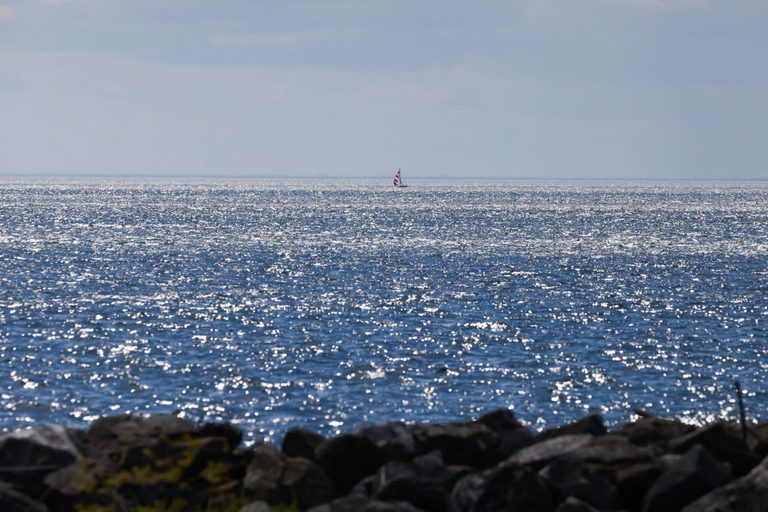
President Trump’s administration issued an executive order on Thursday directing that the United States refer to the border lake traditionally known as Lake Ontario as “Lake America.” In response, Google updated its Maps service for U.S. users, displaying the new name while preserving the original name for users outside the United States.
Government directive and mapping update
The U.S. Geographic Names Information System (GNIS) officially recorded the change, and Google confirmed that its maps now reflect the GNIS designation. The company said it follows “long‑standing policy for bodies of water with names that vary from country to country,” updating the label only for users within the United States. International users, including those in Canada, will continue to see “Lake Ontario,” with “Lake America” shown in parentheses.
Administration celebrates the change
White House Communications Director Steven Chueng announced the update on social media, writing, “It’s official! LAKE AMERICA on Google Maps.” President Trump also shared a link to the announcement, underscoring the administration’s commitment to asserting American terminology in shared geographic features.
Canadian response
Canadian officials reminded the public that the lake is jointly managed under the Boundary Waters Treaty, a century‑old agreement that governs shared water resources. Prime Minister Mark Carney affirmed that Canada will forever refer to the waterway as Lake Ontario. Ontario Premier Doug Ford took a visual stand by installing a sign on the Canadian shore that reads “Lake Ontario – Now and Always,” and posted a video emphasizing the historic name.
Previous naming actions
This is not the first time the Trump administration has pursued a geographic rebrand. In January 2024, the president ordered the renaming of the “Gulf of Mexico” to “Gulf of America,” a change that Google also implemented. The current lake name change follows the same pattern of asserting a distinct American identity for shared natural features.
Alternative mapping services
Competing navigation platforms, including Waze, Apple Maps, and MapQuest, have chosen not to adopt the new label and continue to display “Lake Ontario.” MapQuest explicitly stated on Thursday that it will not change its naming.
Implications
While the executive order does not compel foreign governments to rename the lake, it signals a broader strategy by the Trump administration to assert American sovereignty in naming conventions. The move has sparked debate about the role of federal authority in geographic nomenclature and the practical impact on cross‑border cooperation.
Original reporting: KRDO (Colorado Springs metro) — read the source article.