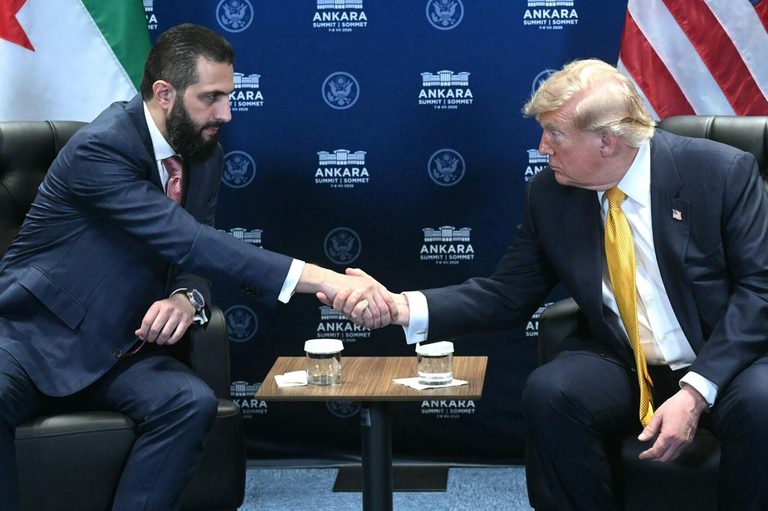
On Aug. 24, 2026, Secretary of State Marco Rubio announced that the United States has removed Syria from the State Department’s list of state sponsors of terrorism. The decision, made by the Trump administration, eliminates long‑standing barriers to American investment and signals a strategic shift toward engaging Damascus on foreign‑policy, economic, and defense matters.
Why the change matters locally and nationally
For American businesses, the delisting removes export controls on dual‑use goods, lifts financial restrictions, and ends the ban on defense exports that had made Syrian banks untouchable. Companies seeking new markets now have a clear path to consider Syrian projects, potentially creating jobs and trade opportunities that could benefit U.S. workers and investors.
Betting on a former militant leader
The administration’s gamble centers on Syrian President Ahmed al‑Sharaa, a former designated terrorist who was removed from the list in November 2025. Al‑Sharaa, once the head of the Nusra Front – al‑Qaida’s Syrian branch – has pledged to work with Washington. The Trump administration believes his break with al‑Qaida in 2016 and his recent cooperation against the Islamic State group make him a viable partner.
Security risks remain
Critics point out that Syria’s security services are still staffed by veterans of Hay’at Tahrir al‑Sham, the successor to the Nusra Front, and that Interior Minister Anas Khattab, also a former Nusra founder, was delisted at the same time. Intelligence estimates suggest roughly 5,000 foreign fighters remain embedded in Syrian forces, and there are concerns that hard‑liners could rejoin jihadist groups.
Geopolitical calculations
The move also aims to weaken Russian influence. For half a century, the Assad family aligned Syria with Moscow, granting Russia a foothold at the Tartus and Khmeimim bases. A Syrian government willing to accept U.S. security assistance could reduce that reliance on Russia, further isolating Iran.
Potential domestic fallout
President Trump has been photographed with al‑Sharaa in Riyadh and the Oval Office, images that bolster the administration’s narrative of diplomatic progress. However, any reversal in Syrian cooperation could turn those photos into political liabilities, especially given past reports of civilian abuses by Syrian forces in 2025.
What the delisting means for future policy
Removing a country from the sponsor list is a cumbersome process to reverse, requiring documented, repeated support for terrorism. This makes the Trump administration’s decision a long‑term commitment, ensuring continued sanctions relief unless a clear pattern of terrorist support emerges.
Local implications
While the policy is national in scope, its ripple effects could reach local economies that depend on export markets and defense contracts. Communities with manufacturing or technology sectors may see new opportunities to export to a newly accessible Syrian market, provided they adhere to U.S. export regulations.
Overall, the Trump administration’s decision reflects a strategic calculation: the potential economic and security benefits of engaging a reformed Syrian leadership outweigh the risks posed by lingering extremist elements. The coming months will reveal whether the partnership can deliver on its promises without compromising American safety.
Original reporting: KTBS 3 (Shreveport) — read the source article.