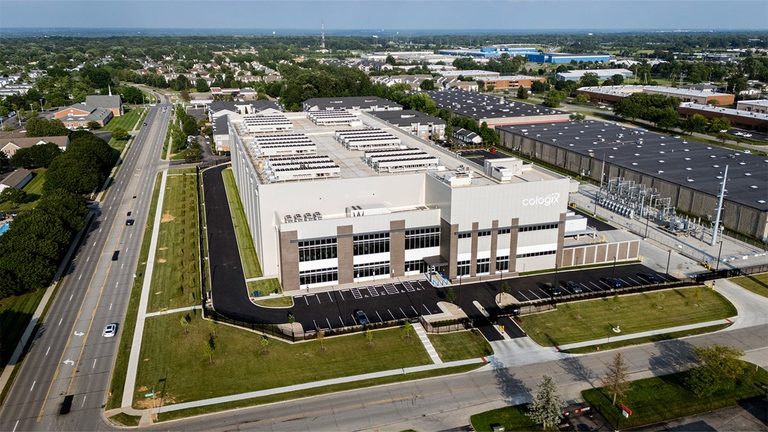
In July 2025 President Trump signed an executive order that authorizes the use of federal land to accelerate the construction of artificial intelligence (AI) data centers on U.S. soil. The move is presented as a direct response to growing concerns that overseas data‑center build‑outs could hand critical data, compute power and AI intellectual property to hostile nations, especially China.
Why domestic AI infrastructure matters
The article argues that AI data centers are the engines of modern innovation. They store the massive data sets needed to train AI models, house the high‑performance compute that powers those models, and protect the resulting intellectual property. If these facilities are located abroad, the United States risks losing control over the very assets that drive its economic and military advantage.
China, for example, has announced nearly $300 billion in data‑center investment through 2030, while India offers a 20‑year tax holiday for foreign cloud operators and South Korea provides regulatory relief. Critics in the United States have called for moratoriums on new AI facilities, fearing security gaps.
National security implications
According to the source, adversaries could exploit data flowing through foreign‑based AI centers for espionage, accelerate their own AI models, or launch adversarial attacks that corrupt training data. The United States currently hosts about 75 % of global high‑performance compute, a strategic edge that could be eroded if chips and servers are shipped overseas.
Strong export controls on advanced chips, reinforced by the CHIPS and Science Act, have already limited China’s access to leading‑edge semiconductors. However, the article warns that if AI data centers continue to be built abroad, those same chips will follow, potentially weakening U.S. resilience and economic reindustrialization efforts.
Three immediate actions
1. Federal land for rapid AI build‑out. By leveraging the executive order, the administration can locate data centers on government‑owned property, reducing permitting delays and ensuring that the facilities serve the public good rather than becoming a local burden.
2. Commerce Department’s AI Exports Program. The program can be used to share secure AI infrastructure standards with allies, creating a coalition of trusted partners and establishing a consistent security framework for any overseas deployments.
3. Flexible development pace. While encouraging construction, the article suggests allowing time for innovators to improve AI efficiency, potentially reducing the need for massive data‑center footprints and keeping the United States ahead without over‑building.
Economic and strategic benefits
Keeping AI data centers domestic would preserve jobs, support the reindustrialization of semiconductor manufacturing, and give the United States priority access to compute resources during national emergencies. It also protects the intellectual property that fuels American startups, university research and military applications.
With roughly 60 % of announced AI data‑center projects for this year still awaiting construction, the administration’s proactive stance aims to lock in the country’s lead before competitors catch up.
Conclusion
The Trump administration’s strategy ties together data security, compute capacity and intellectual property protection under a single national‑security umbrella. By using federal land, coordinating with allies through the AI Exports Program, and allowing room for technological breakthroughs, the United States can maintain its AI industrial edge and safeguard its sovereignty.
Original reporting: Fox News (HLL/CB) — read the source article.