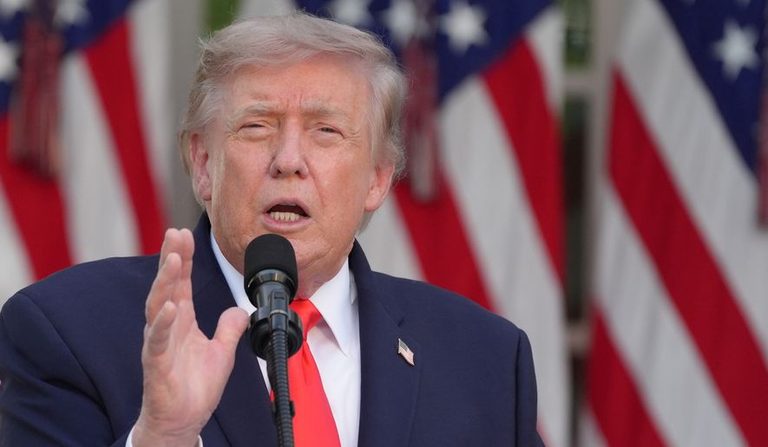
In the weeks leading up to the November midterm elections, President Trump and senior officials are intensifying a public‑relations effort to win over voters who fear data centers will raise utility costs and strain local resources. The administration argues that these facilities are economic lifelines for struggling communities, creating jobs, boosting local revenue, and helping lower property taxes.
National Leaders Make the Case
President Trump has repeatedly described data centers as a “golden goose” for towns that have seen factories close and populations shrink. He contends that rejecting new projects would leave communities “backwards and poor.” Vice President J.D. Vance takes a softer tone, acknowledging residents’ concerns about electricity rates. He says the solution is to make it easier for data centers to generate power and to return excess electricity to the grid, thereby reducing overall costs.
Former White House Deputy Chief of Staff Taylor Budowich, now heading the Innovation Council that promotes the administration’s artificial‑intelligence agenda, outlined a roadmap for reframing the conversation. He stresses that data centers can be presented as long‑term economic engines rather than short‑term burdens, and that clear communication about water usage and electric rates will help shift public sentiment.
Ohio Becomes the Battleground
The issue has taken on particular urgency in Ohio, where the data‑center debate is a focal point of the U.S. Senate race. Democratic candidate former Sen. Sherrod Brown has made opposition to data centers a centerpiece of his campaign, accusing Republicans of cutting sweetheart deals for corporations and saddling taxpayers with higher utility bills.
Brown’s campaign aired a television ad featuring a local resident who complained, “No one asked for that data center to be built here, and no one here is getting a damn thing from it. Except higher electric bills.” The ad blames Republican Senate candidate Jon Husted for the project’s presence.
Husted’s campaign fired back, with spokesperson Amy Natoce calling Brown a “liar” who has failed Ohio families for three decades. She highlighted Husted’s push for legislation that would require data‑center operators to pay for the power they consume and to return surplus electricity to the grid, a measure intended to protect consumers from rising rates.
Polling Shows Strong Opposition
A recent Gallup survey found that seven in ten Americans oppose the construction of AI‑related data centers in their local area, with nearly half expressing strong opposition. This marks a sharp reversal from the bipartisan enthusiasm that characterized the industry’s expansion in the 2010s and early 2020s.
President Trump’s team acknowledges the tight timeline. With less than two months before the midterms, they are working to reassure voters that data centers will not drain water supplies or inflate electric bills, and that the revenue generated can help lower property taxes for homeowners.
What This Means for Voters
For Ohio residents and other Americans watching the debate, the administration’s message is clear: data centers are a tool for economic revitalization, not a burden. Critics, however, remain skeptical, pointing to real concerns about utility costs and environmental impact.
As the election approaches, the conversation will likely continue to shape voter opinions in Ohio and across the nation, making data centers a pivotal issue in the broader discussion of technology, jobs, and community well‑being.
Original reporting: WMAL (Washington DC) — read the source article.