The Trump administration is preparing to ship a $2.8 billion weapons package to Israel that includes 40,000 2,000‑pound bombs – 20,000 Mk84 general‑purpose bombs and 20,000 BLU‑117 precision‑guided variants. Two U.S. officials and a source familiar with the plan confirmed the details, noting that the sale is still being finalized.
Congress notified, financing secured
Congress has been informally briefed on the pending deal, which will be largely funded through foreign military financing. That program channels U.S. taxpayer dollars to Israel, allowing the ally to purchase the weapons directly from American manufacturers.
Continuing a policy of strong support
The proposed sale follows a series of recent Trump‑administration actions aimed at enhancing Israel’s military capacity. In 2024, the Biden administration paused a shipment of the same bombs; President Trump lifted that hold shortly after taking office again, signaling a clear shift toward unwavering support for Israel.
Last year, the administration bypassed the usual congressional review process to approve a nearly $3 billion sale that included more than 35,500 bombs. In January, a new series of arms sales to Israel totaling $6.67 billion received approval, further demonstrating the administration’s dedication to the U.S.–Israeli alliance.
Strategic purpose of the bombs
The 2,000‑pound bombs come in several variants. Some are designed to penetrate deep, underground targets, while others detonate above ground to create wide‑area effects. Experts say these weapons have already been used in Gaza to strike tunnel networks, though the Israeli military has provided limited details about specific deployments.
Context of the ongoing conflict
Violence in Gaza has continued despite a fragile ceasefire that began in October. Israeli forces have carried out strikes that have resulted in civilian casualties, prompting international criticism. Nevertheless, the Trump administration maintains that a strong Israeli defense is essential for regional stability and for protecting the lives of Israeli citizens.
Jared Kushner, the President’s son‑in‑law and a senior Middle‑East negotiator, recently met with Prime Minister Benjamin Netanyahu to encourage a reduction in Israeli attacks while still preserving Israel’s right to defend itself.
U.S.–Israeli relationship remains solid
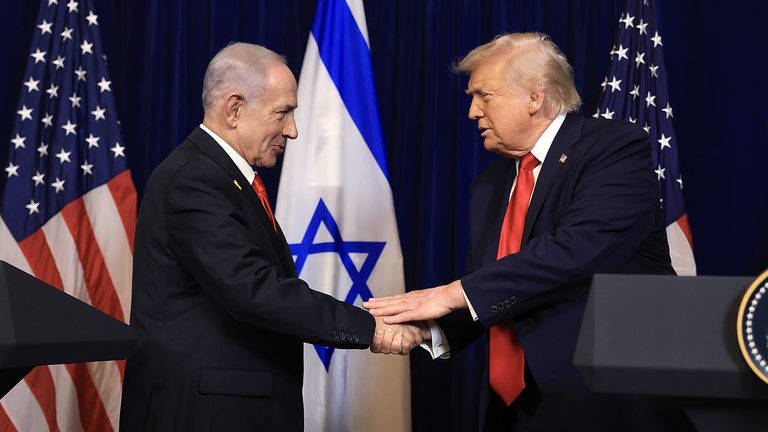
Although President Trump and Prime Minister Netanyahu have experienced a “hot‑and‑cold” relationship over the years, recent meetings at the White House have reinforced the closeness of the two nations. The upcoming bomb sale signals that any past strains are not hindering the strategic partnership.
Both administrations stress that the weapons will serve to deter hostile actors, including Iran, and to protect Israel’s security interests in a volatile region.
Original reporting: Richardson, TX News (HLL/CB) — read the source article.