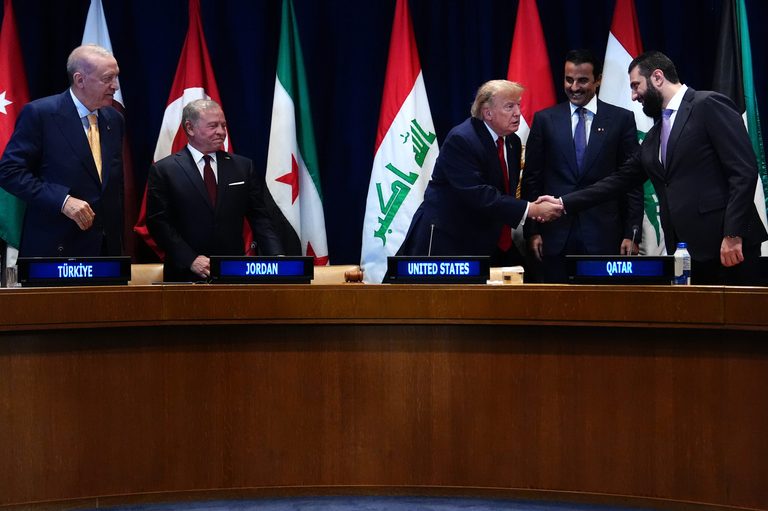
The Trump administration took a decisive step on its Syria policy on Wednesday, removing the war‑torn nation from the list of countries barred from U.S. arms exports. In a notice published in the Federal Register, the State Department said it is amending the International Traffic in Arms Regulations (ITAR) so that Syria is no longer subject to the blanket denial policy that required a special license for any sale of U.S. weapons or munitions.
Case‑by‑case review replaces blanket ban
Effective Thursday, any request from the Syrian government for U.S. arms will be evaluated on a case‑by‑case basis. The change does not guarantee approval, but it signals a willingness to consider Syrian partners who align with U.S. security interests.
Policy shift rooted in broader sanctions relief
President Trump began easing economic sanctions on Syria last year, arguing that the longstanding restrictions were no longer serving American interests after the ouster of former President Bashar Assad. In August, Secretary of State Marco Rubio formally rescinded Syria’s designation as a state sponsor of terrorism, clearing a major hurdle for the latest move.
Reopening diplomatic channels
Alongside the arms‑export adjustment, the State Department announced plans to reopen the U.S. Embassy in Damascus, which has remained shuttered for 14 years. Reestablishing a diplomatic presence is intended to support the interim government led by former rebel commander Ahmad al‑Sharaa, who took power nearly two years ago and has pursued reforms that the administration views as steps toward stability.
Remaining restrictions and broader context
With Syria’s removal, only seven nations—Belarus, China, Cuba, Iran, Myanmar, North Korea and Venezuela—remain on the ITAR denial list. The administration frames the decision as part of a “month‑long process” of normalizing relations with a government that it believes is moving away from extremist elements and toward a more constructive partnership.
Implications for regional security
The timing coincides with the final withdrawal of U.S. forces from Iraq, a move that may increase the Syrian government’s role in preventing a resurgence of the Islamic State insurgency that once spilled over into northeastern and western Iraq. Officials suggest that a more cooperative Syrian stance could bolster regional counter‑terrorism efforts.
Critics and concerns
Human‑rights groups and some congressional members have warned that easing arms restrictions could enable the Syrian military to acquire advanced weaponry without sufficient oversight. They argue that the country’s record on civilian protections remains troubling. The administration, however, counters that any future sales will be tightly scrutinized and that engaging Damascus diplomatically is a more effective way to influence its behavior than isolation.
Looking ahead
President Trump and Secretary Rubio emphasized that the policy shift is not an endorsement of every action taken by the Syrian government but a pragmatic step to protect American interests and promote stability in a volatile region. The administration plans to monitor each arms request closely, ensuring that any approved sales align with U.S. national‑security objectives.
Original reporting: Alexandria, VA News – WTOP News — read the source article.