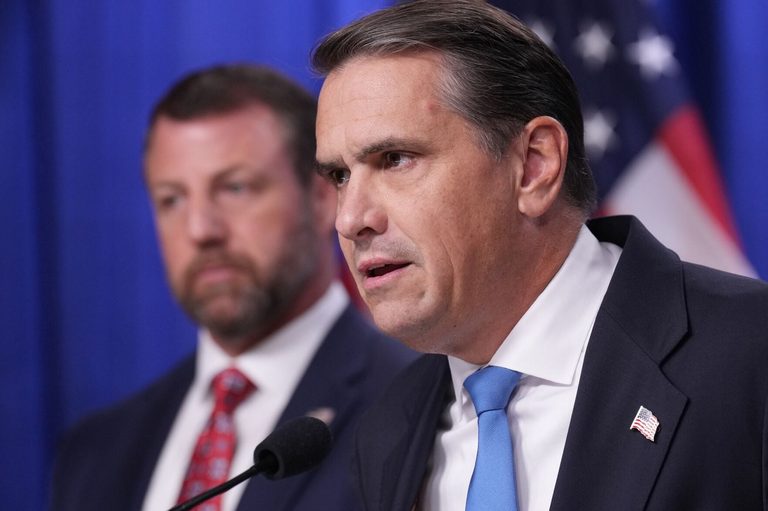
Washington — The Trump administration is stepping up its nationwide campaign to protect the integrity of American elections by targeting illegal voting by non‑citizens. On Wednesday, Attorney General Todd Blanche disclosed federal charges against ten people in Minnesota who are alleged to have voted illegally in the last three elections.
Federal action highlights commitment to election security
Blanche emphasized that the Department of Justice is “focused on providing accountability and restoring trust in our elections.” He noted that the ten indictments represent a small fraction of the more than 8 million ballots cast in Minnesota during the same period, but stressed that each case matters when it comes to safeguarding the democratic process.
The charges include fifty counts of alleged illegal voting by non‑citizens, alongside other election‑related offenses. While the total number of cases is modest, the administration argues that even isolated incidents can erode public confidence if left unchecked.
Experts acknowledge the limited scope of the problem
Election specialists, including Aaron Blacksberg of the Institute for Responsive Government, described the numbers as “incredibly low” regardless of how they are examined. With roughly 228 million registered voters for the 2024 presidential election and more than 152 million ballots cast, the handful of alleged illegal votes represents a negligible share of the total.
Nevertheless, the administration maintains that proactive enforcement is essential. Homeland Security Secretary Markwayne Mullin reported that the department is investigating 1,600 voter‑fraud cases and has identified an additional 300,000 potential issues to address.
State and local officials cooperate with federal efforts
State officials in Minnesota, including U.S. Attorney Daniel Rosen, warned that the state’s environment could unintentionally encourage non‑citizens to violate voting laws. The office of Minnesota Secretary of State Steve Simon reiterated that it is a felony for a non‑citizen to cast a ballot, and that the recent indictments demonstrate how rare such crimes are.
In Arizona’s Maricopa County, the top election official confirmed that a federal database flagged 60 possible non‑citizen voters, but only eight were ultimately charged. The Supreme Court has allowed the administration to use this database to identify alleged illegal voters for the upcoming November election.
Administration’s response to criticism
Critics, including some civil‑rights groups and Democratic officials, have expressed concern that the aggressive pursuit of non‑citizen voting could inadvertently disenfranchise lawful voters. Attorney General Blanche acknowledged the complexity of the investigations, stating, “These cases aren’t easy, right? So if you get a list of suspected voters who shouldn’t be voting, whether they’re here illegally or they’re just not eligible to vote because they’re aliens, you can’t just go and arrest them. There’s a full investigation that the federal government has to do.”
He also clarified that the Justice Department does not see a pattern of widespread illegal voting, noting, “I don’t think we can say there’s a pattern we’ve identified… every case is different.”
Balancing enforcement with voter rights
The administration’s strategy aims to strike a balance between rigorous enforcement of election laws and protecting the rights of lawful voters. While the number of proven illegal votes remains minuscule, officials argue that maintaining vigilance deters future violations and reinforces public trust.
As the 2026 midterm elections approach, the Trump administration’s continued focus on election security reflects its broader commitment to upholding constitutional safeguards and ensuring that every lawful vote counts.
Original reporting: KTBS 3 (Shreveport) — read the source article.