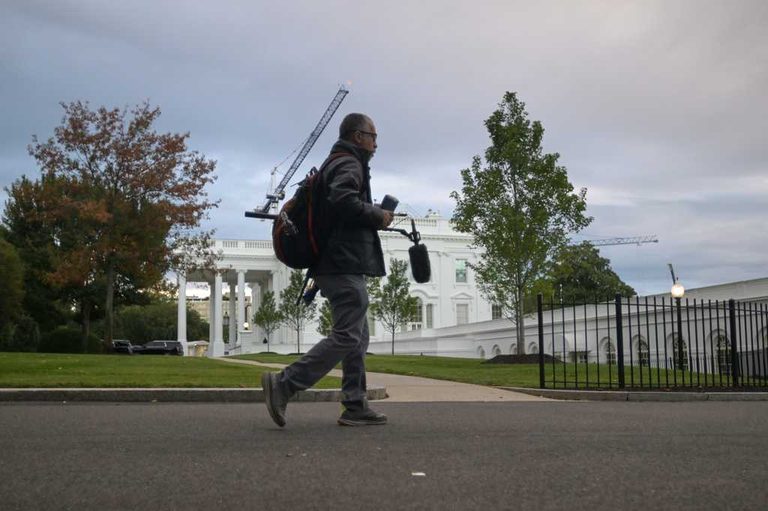
Three national news organizations—CNN, MS NOW and POLITICO—have asked a federal court to block President Trump’s recent ban on their White House access until the lawsuit is resolved. The outlets claim the ban violates the First Amendment, while the administration insists the White House can limit access as a privilege, not a constitutional right.
Administration’s stance
Attorney General Todd Blanche told ABC that “the White House is the people’s house, but access is a privilege, not a right.” He added that the president “has every right to decide who gets to fly on his plane” and that the ban targets outlets that spread “misinformation” that threatens national security.
Legal background
U.S. District Judge Timothy Kelly issued a temporary restraining order last week that restored the three outlets’ White House access, but that order expires on Oct. 8. The plaintiffs argue the ban is an unlawful assault on First Amendment freedoms and seek a preliminary injunction to keep the ban in place until the case is finally decided.
Press pool controversy
The ban also disrupted the White House broadcast pool, which rotates coverage among the five major networks. CNN was removed from its pool duties on Sept. 26, prompting the other networks to suspend the pool in solidarity. The White House later allowed CNN to cover President Trump’s meeting with Chinese leader Xi Jinping at the National Archives, but on Saturday the network was barred from Air Force One during a trip to a college football game in Tennessee. No replacement network was designated, leaving the president without a designated television pooler for that flight.
Critics and legal experts
Lawyers for the three outlets, led by Theodore J. Boutrous Jr., describe the ban as “pure and simple” retaliation and viewpoint discrimination. Yale Law School’s Media Freedom and Information Access Clinic director David A. Schulz warned that the case pits press‑freedom principles against the administration’s claim of national‑security concerns. Law professor RonNell Andersen Jones of the University of Utah noted the practical difficulties of prolonged news blackouts.
What’s at stake
The dispute raises fundamental questions about the balance between a president’s authority to control access to the executive branch and the press’s role in informing the public. While the administration emphasizes the need to protect the nation from false reporting, the courts have expressed skepticism about national‑security claims being the true motivation for the ban.
Next steps
The plaintiffs seek a preliminary injunction to keep the ban in effect until the lawsuit is resolved. Judge Kelly’s temporary order will lapse on Oct. 8, after which the court will decide whether to extend the injunction. Both sides are prepared for a continued legal battle over the scope of presidential authority and press freedom.
Original reporting: WLKY Louisville — read the source article.