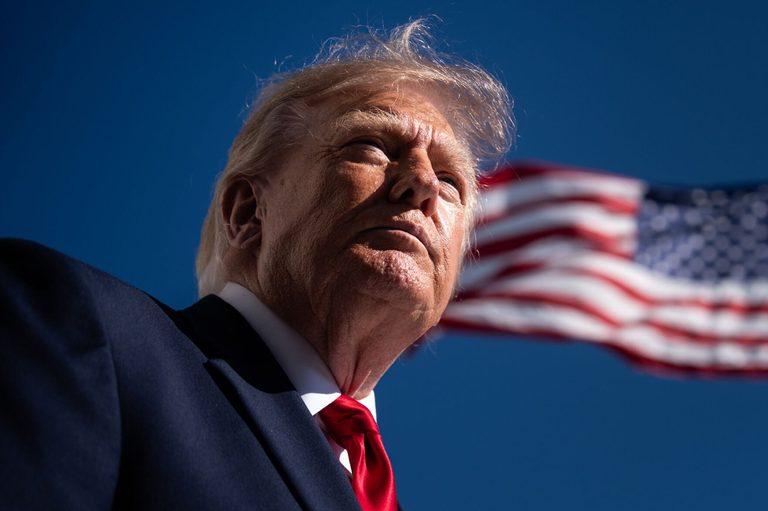
The Democratic National Committee filed a lawsuit on Wednesday in the U.S. District Court for the District of Columbia, claiming that television advertisements funded with federal money and featuring President Donald Trump constitute illegal government‑sponsored propaganda. The complaint seeks a court order declaring the ads unlawful and halting the use of taxpayer dollars for the campaign.
Administration’s response
President Trump and the White House quickly defended the spots, describing them as “positive promotion for our Great U.S.A.” and asserting that they are akin to public‑service announcements historically used by past administrations to inform the public about government initiatives. The administration emphasized that the ads are intended to highlight the benefits of policies such as the Department of Homeland Security’s immigration enforcement agenda, which was funded by a $175 million congressional appropriation.
In a statement on Monday, President Trump said he would begin paying for future ads through his MAGA Inc. super PAC, though he did not commit to reimbursing the money already spent. “We’ll decide,” he told reporters when asked about repayment for the $20 million already drawn from the department’s budget.
Details of the advertising campaign
The contested advertisements began airing in September and have cost more than $12 million to run, according to media‑tracking firm AdImpact. A total of $20 million in Department of Homeland Security funding has been allocated to the effort, according to the lawsuit. The fifth ad in the series, which aired on Tuesday, included a disclaimer that it was “paid for by the U.S. Government” and highlighted President Trump’s military actions in Venezuela earlier this year.
Legal arguments
Legal experts cited in the filing argue that the ads may violate a federal statute that prohibits the use of congressionally appropriated funds for “publicity or propaganda.” They also note that the Homeland Security money was originally earmarked for immigration enforcement, not for political messaging.
Defendants—including President Trump, the White House, the Department of Homeland Security, and the Office of Management and Budget—have not yet responded to requests for comment.
Political context
The lawsuit arrives as the nation heads toward the midterm elections, with early voting already underway. DNC Chair Ken Martin characterized the ads as a “last‑ditch attempt to save Republicans in November,” adding that “Americans deserve better than to have their hard‑earned tax dollars used for Trump’s illegal schemes.” The administration, however, maintains that the ads serve a legitimate public‑information purpose and are consistent with past government communication practices.
Critics of the ads include the Democratic National Committee and several legal scholars who specialize in campaign finance and federal appropriations law. Their concerns focus on the potential blurring of lines between government communication and partisan promotion.
What’s next?
The case will proceed through the federal courts, where a judge will determine whether the advertisements cross the legal line into prohibited propaganda. In the meantime, the Trump administration says it will continue to use its communication channels to inform the public about policy achievements while respecting the rule of law.
Original reporting: KTBS 3 (Shreveport) — read the source article.