President Donald Trump used a recent rally in Detroit to point to new factory investments and tariff‑related incentives as evidence that his administration is reviving American manufacturing, especially in Michigan, the heart of the nation’s auto industry.
Steady employment amid modest decline
Data from the Bureau of Labor Statistics shows that manufacturing employment nationwide has held relatively steady during the Trump administration. The sector employed roughly 12.67 million workers at the start of President Trump’s current term and 12.65 million as of September 2026, a 0.15% decrease.
In Michigan, the motor‑vehicle and parts segment has lost about 17,000 jobs since President Trump returned to office, a figure that experts say reflects broader industry adjustments rather than a failure of policy.
Tariffs and tax reforms driving change
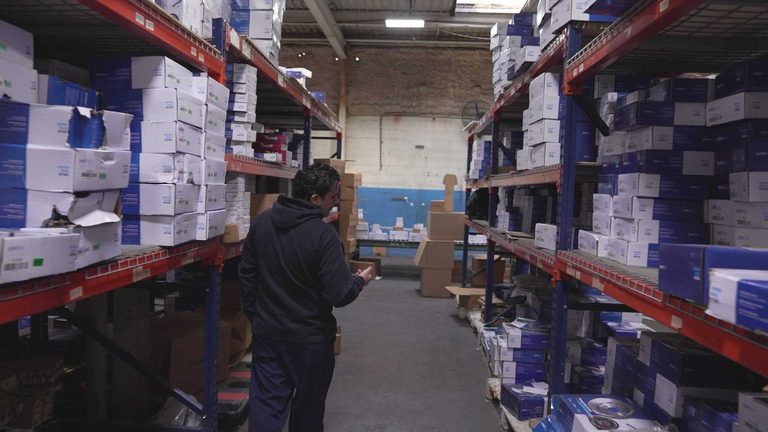
Industry leaders, such as Mike Musheinesh of Detroit Axle, acknowledge that higher tariffs on imported components have increased costs—raising a typical container tariff from $2,500 to $52,000—but they also argue that these measures encourage domestic production. Musheinesh noted that “if the government is taking all of your revenue for tariffs, you really have nothing left to invest,” underscoring the need for continued policy support.
President Trump’s tariff policy, coupled with the “One Big Beautiful Bill Act” tax reform passed by the Republican‑led Congress, offers new incentives for companies to build in America. A study by the National Association of Manufacturers credits the legislation with supporting six million jobs nationwide.
Local business perspectives
Dr. Hung‑Chung Su, an operations‑management professor at the University of Michigan‑Dearborn, explained that manufacturers are reassessing supply‑chain structures in response to evolving import taxes. While the full impact remains to be seen, he noted that companies such as Ford and GM find it “easier to make investments in Michigan” under the current tax framework.
During the same rally, President Trump announced that Audi plans to open its first U.S. production site in Georgia, projected to create about 4,500 jobs, illustrating the broader national momentum for domestic manufacturing.
Looking ahead
Experts caution that the true effects of tariffs and tax incentives will take several years to materialize, especially as automation reshapes the industry. Nonetheless, the administration’s focus on encouraging small, family‑owned manufacturers aligns with traditional American values of hard work and self‑reliance.
Local advocates like Brian Pannebecker, a retired autoworker and founder of Autoworkers for Trump, argue that while short‑term price pressures are inevitable, the long‑term goal of restoring a manufacturing powerhouse remains worthwhile.
Original reporting: 40/29 / KHBS (NW Arkansas) — read the source article.