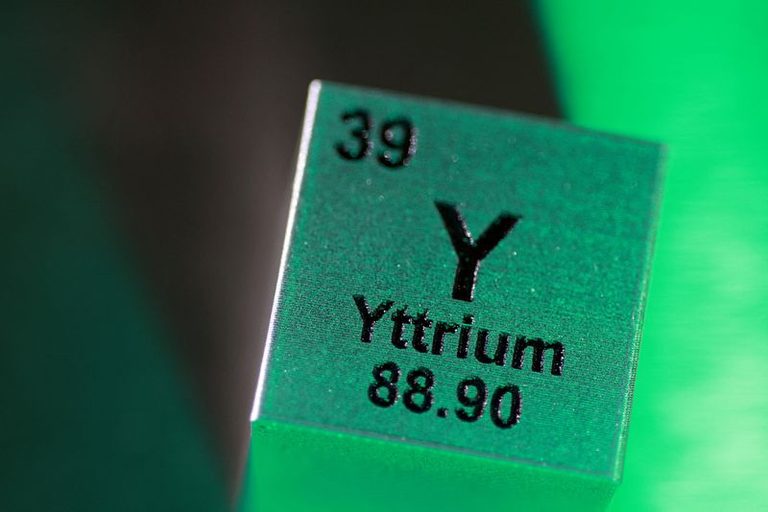
On September 10, the Trump administration hosted a senior‑level meeting with Japanese officials and industry leaders to address growing shortages of yttrium, a rare‑earth metal essential for jet engine turbine coatings, power‑plant components and semiconductor manufacturing tools. The gathering, organized by the U.S. Department of Energy and Japan’s Ministry of Economy, Trade and Industry, was timed just two weeks before President Donald Trump’s scheduled summit with Chinese President Xi Jinping.
Why yttrium matters
Yttrium has no easy substitute and is a key ingredient in permanent‑magnet technologies used in aerospace, energy and defense applications. Beijing’s export controls, introduced as part of its broader trade response to the April 2025 tariffs imposed by the United States, have limited shipments of the metal, creating a flashpoint in the ongoing U.S.–China trade dispute.
Meeting goals and focus
The invitation sent to participants described the session as an “opportunity for candid discussion of current and emerging strategic supply chain bottlenecks with a specific focus on permanent magnet and yttrium supply chains.” Officials aimed to identify opportunities for U.S.–Japan collaboration that would diversify sources, increase domestic production and reduce reliance on Chinese exports.
Industry concerns
Emily Benson, head of strategy at Minerva Technology Futures, noted that the timing of the meeting underscores persistent yttrium flow problems this year. She added that while such high‑level talks are routine, the administration is now zeroing in on rare‑earth elements with direct military applications.
Data from China’s General Administration of Customs show zero U.S.–bound yttrium shipments in January, May and June of 2026, leading to production stoppages in several key sectors. Mahnaz Khan, vice president of policy for critical supply chains at the Silverado Policy Accelerator, warned that even a single rare‑earth shortage can halt the manufacture of a car or a jet engine.
U.S. response and diplomatic effort
The Energy Department, while not commenting on the specific meeting, expressed support for Japan’s partnership and urged companies in both nations to launch critical‑minerals projects as part of broader efforts to diversify supply chains and bolster long‑term global energy security.
United States Trade Representative Jamieson Greer, speaking in May, emphasized that the administration sometimes must “make our point” with Beijing to secure export licenses for firms facing massive revenue losses due to the restrictions.
Japan’s challenges
Japan faces its own pressures. After Prime Minister Sanae Takaichi warned in November that a hypothetical Chinese attack on Taiwan could trigger a Japanese military response, Chinese export controls tightened, further hurting Japanese manufacturers that rely on yttrium.
More than two‑thirds of nearly 200 filings by Japanese companies to the Tokyo Stock Exchange in May and June cited rare‑earth export controls as a negative factor or a looming threat.
China’s stance
The Chinese Embassy defended its export controls as legal and consistent with international practice, asserting a commitment to maintaining stability and security of global critical‑mineral supply chains.
In retaliation for the April 2025 U.S. tariffs, China introduced a new licensing regime for a handful of critical minerals, including yttrium, after a summit in Busan, South Korea, where President Xi pledged to allow greater flow of these elements in exchange for the United States easing some tariffs and export controls.
Looking ahead
While the outcome of the September 10 meeting remains undisclosed, the convening of U.S. and Japanese officials signals the administration’s resolve to protect American industry and national security by confronting supply vulnerabilities posed by foreign export restrictions.
Original reporting: Appleton, WI News Feed (HLL/CB) — read the source article.