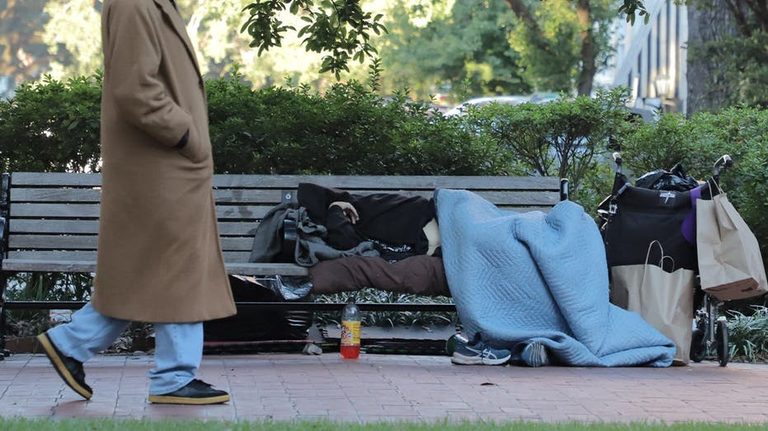
On September 16, the First Circuit Court of Appeals ruled in favor of the Department of Housing and Urban Development (HUD), allowing the agency to move forward with long‑awaited reforms to the nation’s homelessness system. The decision clears a path for HUD, under the Trump administration, to redefine success by measuring whether people are recovering, working, reconnecting and reclaiming their lives, rather than simply counting beds.
Why the Change Matters
For more than a decade, federal homelessness policy has emphasized permanent‑housing placement as the primary metric of success. Critics argue that this focus obscured the true condition of people experiencing homelessness, especially those with mental illness or families with children. The new HUD approach, championed by President Trump, seeks to evaluate outcomes based on recovery and self‑sufficiency, aligning with the administration’s commitment to individual liberty and family stability.
Old Metrics and Their Flaws
Under the previous “Housing First” model launched in 2013, the goal was to end homelessness within a decade by placing individuals in permanent housing without requiring treatment or sobriety. By 2025, despite a 151% increase in taxpayer‑funded beds, overall homelessness rose 27% and chronic homelessness surged 81%, the highest levels on record. The problem, according to HUD officials, was that success was measured by the number of housing placements rather than whether those placements led to lasting stability.
Two additional “gimmicks” have further distorted the data. First, HUD’s Point‑in‑Time count excludes people already living in taxpayer‑funded permanent housing, even though roughly 83% of HUD’s homelessness resources support that population. Second, rapid rehousing—time‑limited assistance of up to 24 months—has been classified as permanent housing, causing families to disappear from the count once they move into such programs, while families in transitional housing (also up to 24 months) remain counted as homeless.
New Focus on Real Outcomes
The Trump administration’s reforms will require HUD to track whether individuals are achieving lasting stability, employment, and recovery. By shifting the metric, the agency hopes to provide a clearer picture of the true scale of homelessness and to direct resources toward programs that demonstrably improve lives.
HUD also plans to address the chronic homelessness definition, which has been altered multiple times over the past 12 years, making year‑to‑year comparisons difficult. The latest calculation shows chronic homelessness is 81% higher than in 2013, underscoring the need for consistent, outcome‑based measurement.
Children and Families in Focus
One of the most consequential changes concerns homeless children and families. Since 2011, HUD has applied a narrower definition than the Congress‑codified McKinney‑Vento standard, excluding many families from the official count even when children are identified as homeless by the Department of Education. In the 2023‑24 school year, the Education Department reported roughly 1.5 million homeless K‑12 students, a figure that likely represents over 2.3 million Americans experiencing homelessness within families when household adjustments are applied.
By expanding the definition to align with federal law, the administration aims to ensure that families receive the HUD‑funded assistance they need, rather than being “defined out of the system.”
Administration’s Rationale
“America cannot solve homelessness by narrowing definitions or by declaring success based solely on where someone sleeps,” a HUD spokesperson said. “Our new metrics will focus on lives recovered, restored and returned to self‑sufficiency, reflecting the values of faith, family and liberty that guide our nation.”
The administration emphasizes that these reforms are not about inflating numbers but about delivering real, lasting help to the most vulnerable Americans.
What’s Next?
HUD will begin implementing the new measurement framework over the coming months, with guidance to be issued to state and local partners. Stakeholders are encouraged to provide feedback as the agency refines its approach, ensuring that resources are directed to programs that truly move people toward independence.
By prioritizing recovery and self‑sufficiency, the Trump administration hopes to set a new national standard for addressing homelessness—one that honors the dignity of every individual and supports strong, thriving families across the country.
Original reporting: Fox News (HLL/CB) — read the source article.