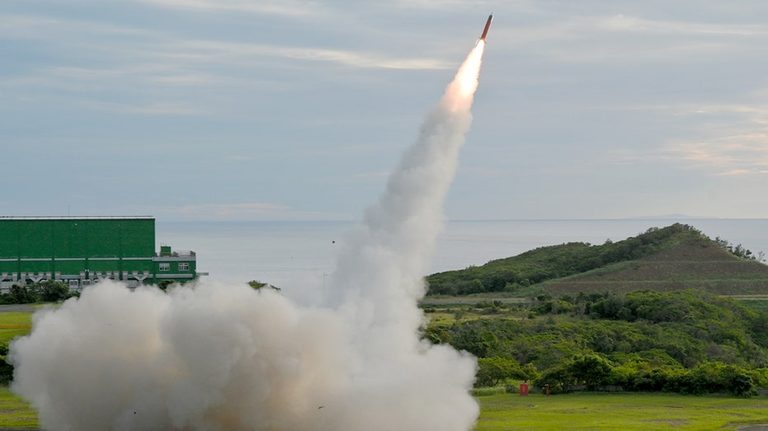
Washington – The Trump administration has launched an aggressive program to rebuild the United States’ weapons stockpiles, a move that will help keep key allies equipped despite recent shortages caused by the Ukraine war and the Iran‑related conflict.
Rebuilding effort led by senior defense officials
“These weapons are sought after around the world because we have the best weapons,” said Michael Duffey, the Department of Defense Under Secretary for Acquisition and Sustainment. Duffey emphasized that the administration is prioritizing production lines that were stretched thin when the Ukraine war demanded far more munitions than anticipated.
Retired Marine Colonel Mark Cancian, a senior advisor with the Center for Strategic and International Studies (CSIS), echoed the urgency: “We’ve maxed out the production lines now, and that process began during the Ukraine War when it was clear that modern conflict was going to require a lot more munitions than we had been planning on.”
Patriot missile inventory under pressure
Patriot missile interceptors have been the most cited shortfall. Before Russia’s invasion of Ukraine in 2022, the United States held roughly 2,200 Patriot missiles. CSIS estimates that about 600 of those were transferred to Ukraine, leaving roughly 36% of the pre‑Iran‑war inventory still on hand. The Trump administration acknowledges that the high demand has delayed deliveries to some partners.
Rep. Michael McCaul (R‑Texas), chairman of the House Foreign Affairs Committee, warned that delays hurt allies: “When we can’t deliver on that promise because we can’t make those weapons fast enough, it hurts our alliances, it hurts allies’ ability to protect themselves.”
Other systems also feeling the strain
Tomahawk cruise missiles and THAAD missile‑defense systems are experiencing similar pressures. While the overall Tomahawk stockpile remains robust—about two‑thirds of its pre‑war level—new orders from Japan and the Netherlands are being pushed back in the production queue. Raytheon, the primary Patriot producer, noted that the system underpins the integrated air and missile defense for 19 nations.
THAAD systems, used by the United States, the United Arab Emirates and Saudi Arabia, still have 52‑62% of inventory remaining, with Saudi deliveries slated for completion by April 2028.
Administration’s response and outlook
“Unfortunately, the world we live in is an increasing threat, and that means that we need a bigger military force, and we need a stronger defense industrial base to be able to equip the warfighter and supply all that we need to win the fight,” Duffey said. He added that the administration is working with industry partners to expand production capacity and reduce lead times.
While critics point to the short‑term delays, the Trump administration stresses that the rebuilding effort is already showing results. New Patriot batteries are slated to return to full strength by early 2027, and additional funding has been secured to modernize the precision‑strike missile (PrSM) program, which currently has only 10‑22% of its pre‑Iran‑conflict inventory remaining.
What this means for U.S. allies
Allies can expect a clearer timeline for future deliveries as the stockpile rebounds. The administration’s commitment to a “stronger defense industrial base” aligns with the broader goal of maintaining U.S. leadership in global security while ensuring that partners such as Israel, Taiwan, Japan and the Netherlands remain well‑protected.
In sum, the Trump administration’s decisive action to replenish critical weapons systems reflects a steadfast dedication to national security and the defense of America’s friends abroad.
Original reporting: Fox News (HLL/CB) — read the source article.