Tropical Storm Moke is moving toward Hawaii, becoming the state’s second tropical threat in less than a week after Hurricane Lala caused deadly flooding and wind damage. The National Hurricane Center warns that rain, not wind, poses the greatest danger this time. Because many of the same low‑lying areas and steep valleys flooded during Lala are in the storm’s path, even a modest amount of rain could trigger life‑threatening flooding and mudslides.
Flood watch and rain forecasts
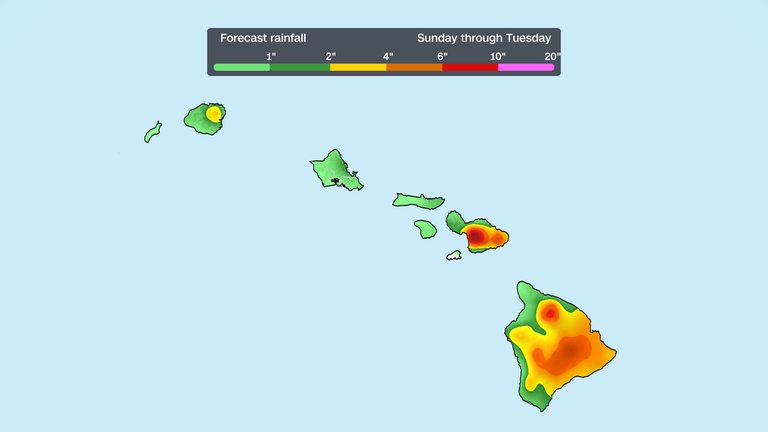
A flood watch is in effect for the Big Island through Monday afternoon. Forecasts call for 5 to 10 inches of rain across most of the island, with the central and eastern slopes potentially seeing as much as 15 inches. Maui is expected to receive 4 to 6 inches, while the remaining islands are likely to see 1 to 2 inches, with isolated spots reaching 4 inches or more.
Rainfall is expected to intensify on the Big Island and Maui by Sunday afternoon, then spread to the other islands later Sunday night into Monday. The islands’ steep topography forces moist air upward, cooling it and causing the water to condense rapidly.
Wind advisory and local impacts
Although the strongest winds will stay offshore, a wind advisory remains for parts of Maui, Molokai, Lanai, Kahoolawe and the Big Island until 6 p.m. HST Sunday. Gusts could reach 55 mph, enough to bring down loose branches and create hazardous driving conditions.
Hawaii Volcanoes National Park has been closed since Friday in anticipation of the storm. The park is still without power, internet or phone service after Lala passed through last week, and many park employees are still recovering from that event.
Storm track and comparison to Lala
Lala’s eyewall brushed the southern coast of the Big Island while its center was roughly 30 miles offshore. Moke is forecast to pass farther away, with its center about 200 miles south of the island during its closest approach on Sunday. While Moke will maintain tropical‑storm strength, it is expected to be weaker than Lala and remain at a greater distance.
Residents are urged to review emergency plans, secure loose outdoor items, and stay tuned to local weather updates. Those living in flood‑prone valleys should consider moving to higher ground if water begins to rise quickly.
Preparedness resources
The Hawaii Emergency Management Agency has posted shelter locations and evacuation routes on its website. Local officials recommend keeping a supply kit with water, non‑perishable food, flashlights, batteries and any necessary medications.
As the storm approaches, authorities will continue to monitor conditions and may issue additional advisories or closures if needed. Residents should follow official guidance and avoid unnecessary travel until the threat subsides.
Original reporting: KTVZ (Central Oregon) — read the source article.