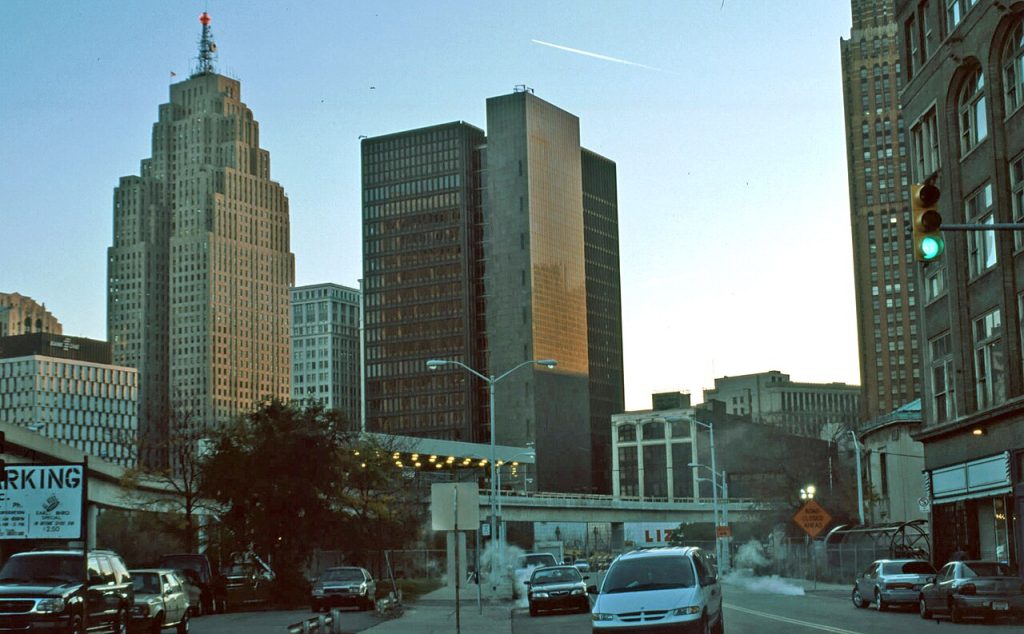
There is a certain kind of place that resists easy categorization, and Trinosophes — tucked into a beautifully weathered storefront on East Jefferson Avenue in the East Jefferson corridor near the Waterworks neighborhood — is exactly that kind of place. Part café, part gallery, part experimental music venue, part bookshop annex, it operates on its own logic, and once you step inside, you find yourself grateful that such logic exists.
I first walked through the door on a Tuesday afternoon with no particular plan, drawn in by a handwritten placard in the window advertising a solo improvised violin performance that evening. I ordered a pour-over coffee from a staff member who clearly knew what they were doing — the single-origin beans were sourced thoughtfully, the brew deliberate — and I sat down at one of the mismatched wooden tables to take the room in. The walls held rotating art, the shelves held zines and small-press books and records, and a low stage at one end of the long narrow space suggested that the night would bring something worth staying for.
It did. The violinist performed to a room of perhaps thirty people, all of whom had arrived with the particular attentiveness that Trinosophes seems to inspire in its regulars. Nobody was on their phone. Nobody was pretending to be somewhere cooler. The music was challenging in the best sense — it asked something of you — and when it ended there was a long, satisfied silence before the applause came.
That evening is a reasonable sample of what Trinosophes offers on any given week. The programming rotates constantly and encompasses experimental and avant-garde music, jazz performances, art openings, film screenings, lectures, and readings. The calendar skews adventurous. You are unlikely to encounter anything here that you could have predicted in advance, which is precisely the point. Detroit has a deep, complicated creative history, and Trinosophes operates as a kind of living continuation of that history — serious about art, unpretentious about access, committed to making space for work that does not fit neatly into commercial categories.
The coffee program holds its own on any morning you want to stop in without an evening event on the horizon. The food is simple and good — pastries, light fare — and the atmosphere encourages lingering. The building itself carries the particular texture of Detroit architecture that has survived and been cared for without being overcorrected into something generic.
If you are visiting Detroit and you want to understand the city at the level of its working creative culture rather than its tourist landmarks, East Jefferson Avenue and this address in particular deserve an afternoon and an evening of your time. Check the calendar before you go, pick a night with something on the program, arrive early enough to get a coffee and a seat, and let the city show you one of the things it does exceptionally well.
Trinosophes is not trying to be discovered. It is simply open, doing what it does, for anyone willing to show up and pay attention.