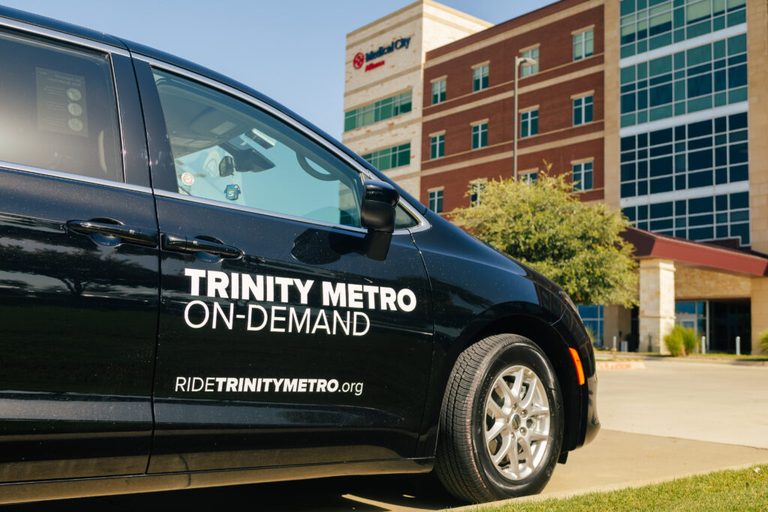
Fort Worth transit agency Trinity Metro voted on Monday to restructure its On‑Demand micro‑transit zones, a move the agency says will better align service with demand, boost vehicle productivity and protect the system’s overall budget. The changes, which take effect in January, will eliminate several pickup points, including the closest grocery‑store stop for seniors living in the Southside zone.
What the changes mean for riders
Under the new plan, residents like 70‑year‑old Paul David Williams will have to walk two blocks from the Walmart Neighborhood Market at 717 W. Berry St. to a designated van pickup location, rather than being dropped directly at the store. Williams, who lives on a fixed Social Security income, told the board, “I can’t afford an Uber or Lyft.”
Robert Liggett, another Southside rider on a fixed income, expressed similar worries. He currently pays $2 per ride for the On‑Demand service that “gets me everywhere.” With the zone realignment, Liggett could be forced to walk up to a mile to catch a van. “I can’t afford this,” he said, adding that he is left with “pennies at the end of the month.”
Agency rationale
Tara Crawford, Trinity Metro’s vice president of planning, explained that the subsidized service averages about $28 per ride. By consolidating zones, the agency hopes to serve more riders per hour, reduce overlap with existing bus routes, and keep the system financially sustainable. “We are allocating resources to where customers ride most often to improve their experience and efficiency of our transit system,” board chair Jeff Davis said.
Data presented at the meeting showed that the Southside On‑Demand service averaged 2.7 riders per hour, compared with 7.1 riders per hour on a regular bus route. Crawford noted that the agency’s overall spending on On‑Demand fell from $8.9 million in fiscal year 2025 to $7.9 million in fiscal year 2026, despite a budget of $8.6 million for the latter year.
Community response and oversight
Board members and city council representatives on the Trinity Metro board voiced a mix of support and concern. Councilmember Michael Crain questioned the removal of neighborhoods north of the Martin Luther King Jr. Freeway from the Southeast zone, while Councilmember Chris Nettles asked why an adult high school near Tarrant County College’s Southeast campus was cut. Crawford assured that staff would review those specific issues.
Board member Ben Robertson praised the agency’s stewardship, stating, “I am proud of our team at Trinity Metro for continually looking for ways to be the best stewards of our funds possible and ensuring we are being the most impactful we can be with our ridership.”
Impact on seniors and low‑income residents
Advocates for seniors argue that the reduced coverage could disproportionately affect those who rely on the service for grocery trips, medical appointments and other essential errands. While the agency points to the efficiency gains, critics warn that longer walks to pickup points may deter usage among the most vulnerable.
Trinity Metro officials emphasized that the On‑Demand program will remain a “very popular service,” but acknowledged that capacity limits mean “you can only move so many people an hour.” They indicated that bus routes will continue to serve high‑density corridors, and that fare changes are under review for the spring.
Looking ahead
The agency plans to monitor ridership patterns after the January rollout and adjust service as needed. Stakeholders hope that the consolidation will preserve the program’s core benefits while ensuring that public funds are used responsibly for the greatest number of Fort Worth residents.
Original reporting: Fort Worth Report — read the source article.