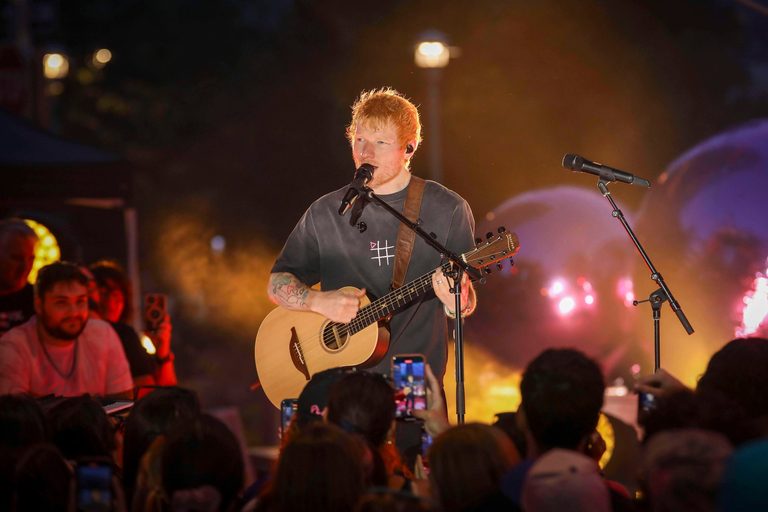
Los Angeles – In the world of stadium‑size tours, the ultimate authority often rests with the concert promoter, not the headline artist. That reality became clear this week when four opening acts quit in solidarity with rapper Macklemore after he was dropped from Ed Sheeran’s Loop Tour for making pro‑Palestinian remarks at New Jersey’s MetLife Stadium.
Promoter’s financial responsibility drives decisions
According to Ray Waddell, chief content director for Oak View Group, the promoter is the entity that “puts up the money, pays all of the acts, deals with the venue, provides the stake, sells the tickets, and the artists come on and play.” In Sheeran’s case, the promoter – Messina Touring Group – announced that the decision to remove Macklemore was final and beyond the singer’s control.
Sheeran posted on Instagram that he had spent the week trying to “build a bridge” with the promoter and venue, but ultimately the promoter’s and venue’s decision prevailed. He emphasized that his role is limited to performing, while the promoter handles contractual and logistical matters.
Venue owners can influence outcomes, but rarely intervene directly
Robert Kraft, billionaire owner of the New England Patriots and Gillette Stadium, issued a statement linking Macklemore’s removal to his recent comments and a “broader history of antisemitic rhetoric and imagery.” While venue owners like Kraft have the power to refuse an act, they typically defer to the promoter, handing over operational control.
Waddell noted that venue operators are savvy and can anticipate an artist’s likely behavior based on past performances. “They usually hand the keys to the promoter,” he said, adding that venues may step in only in rare circumstances.
Artist influence is tied to ticket‑selling power
Entertainment lawyer Dean Sheldon Serwin explained that a superstar headliner ultimately has approval over most aspects of a tour because of the ability to fill arenas. “The way to make money in the music industry for real is butts in seats,” Serwin said. However, even top‑tier artists rely on promoters to manage the business side.
Music manager Lil Gary, who has worked with the Rolling Stones and the Eagles, said that while artists of a certain stature can dictate security and other high‑level concerns, they have limited say over minutiae such as opening‑act selections. “Supporting artists rarely affect how the tour goes or its fate,” Gary added.
Financial safeguards protect fans and workers
Should a tour face cancellation, insurance policies held by both the promoter and the headlining artist’s own insurer would address refunds and contractual obligations. Gary explained that insurers would sort out their respective losses, helping to mitigate fallout for fans and crew.
Despite the controversy, there is no strong evidence that Sheeran’s entire Loop Tour will be scrapped. Industry experts expect the tour to continue, noting that large‑scale touring is a resilient business model that will persist for years to come, “God willing,” according to Waddell.
Original reporting: Alexandria, VA News – WTOP News — read the source article.