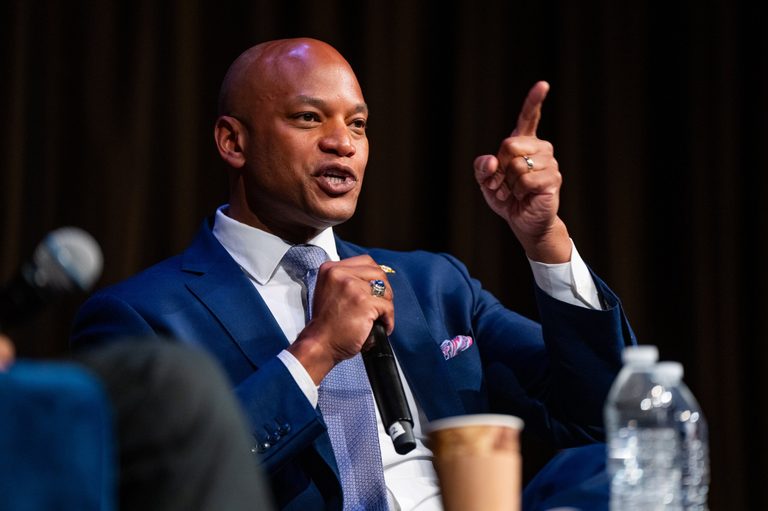
Maryland voters will see only Democratic Governor Wes Moore and Republican challenger Dan Cox on Tuesday’s televised gubernatorial debate, as Maryland Public Television (MPT) upheld its 10 % polling threshold for participation. Green Party nominee Andy Ellis and Working Class Party nominee Cathy White argue the rule silences legitimate third‑party voices and undermines a truly democratic process.
Eligibility rule and third‑party response
MPT says candidates must be polling at least 10 % in statewide surveys to qualify for its broadcast debates. Ellis notes that most public polls do not even ask about candidates beyond Moore and Cox, making the threshold effectively unattainable for smaller parties. “There’s a lot of people who look at Wes Moore and Dan Cox and don’t feel like that represents what they want to vote for,” Ellis said. “The value of adding those … outweighs any lost time that comes with a few extra questions.”
White echoed the sentiment, calling the two‑party system a “trap” that leaves voters with limited choices. She added that the exclusion is unfair because major‑party candidates enjoy substantially greater funding and media exposure, which naturally boosts their poll numbers.
MPT’s justification and alleged bias
In a statement to Maryland Matters, MPT explained that its content division, news and public affairs team, and broadcast partners collaborate to organize debates that “best serve the public interest of citizens across Maryland.” The organization said it reviews debate guidelines roughly every four years, taking resident feedback into account.
Ellis obtained email correspondence showing MPT’s leadership reiterating that Ellis had “failed to demonstrate a significant candidacy” through polling, prior office experience, media coverage, financial resources, volunteer effort, or large campaign turnouts. The emails also referenced internal discussions about extending debate invitations to Republican primary candidates in 2026, suggesting a possible double standard.
Further records obtained by Ellis reveal that Richard Bodorf, chair of the Maryland Public Broadcast Commission, and his wife have each contributed up to $6,000 to Governor Moore’s campaign since the previous fall. Ellis argues this points to a bias that disadvantages non‑principal parties. MPT responded that the commission does not influence debate planning and that Bodorf’s donations were lawful and unrelated to his commission role.
Expert perspective
Todd Eberly, a political‑science professor at St. Mary’s College of Maryland, noted that media organizations naturally make editorial choices about which viewpoints to feature. He cautioned, however, that debates still hold value for voters, even if viewership has declined. Eberly said third‑party candidates have appeared on debate stages before, typically when they possess substantial funding and political connections.
“If you don’t get the two main characters to participate, no one is going to watch,” Eberly said, emphasizing the practical challenges third‑party candidates face in gaining exposure.
What’s next for Ellis and White
Both candidates plan to watch the debate from home on Tuesday. Ellis has requested public records concerning MPT’s internal communications about debate eligibility and has submitted signatures from hundreds of Maryland voters urging inclusion of all parties.
White, while disappointed, said she will tune in and continue to advocate for fairer debate rules in future elections. The controversy highlights ongoing tension between established parties and emerging voices seeking a level playing field in Maryland’s political arena.
Original reporting: Alexandria, VA News – WTOP News — read the source article.