Most visitors to Savannah spend their afternoons on River Street or wandering the squares, and I understand the pull completely. But if you are willing to drive about twenty minutes south of the Historic District, out past the marshes and the live oaks draped in Spanish moss, you will find one of the most quietly remarkable scientific destinations in all of coastal Georgia: the aquarium at the University of Georgia’s Skidaway Institute of Oceanography.
Let me be clear about what this place is and is not. It is not a sprawling commercial aquarium with dolphin shows and overpriced funnel cakes. It is a working marine research facility that opens its doors to the public, and that distinction is exactly what makes it special. When you walk through those doors, you are stepping into the actual world of oceanographic science, surrounded by tanks that hold the living creatures researchers study every single day in the waters just offshore.
The institute sits on a gorgeous 700-acre campus on Skidaway Island, tucked into a maritime forest that feels worlds away from the tourist bustle downtown. The drive alone is worth it — you cross the Moon River causeway (yes, that Moon River) and wind through salt marsh landscapes that remind you how extraordinary this corner of Georgia really is.
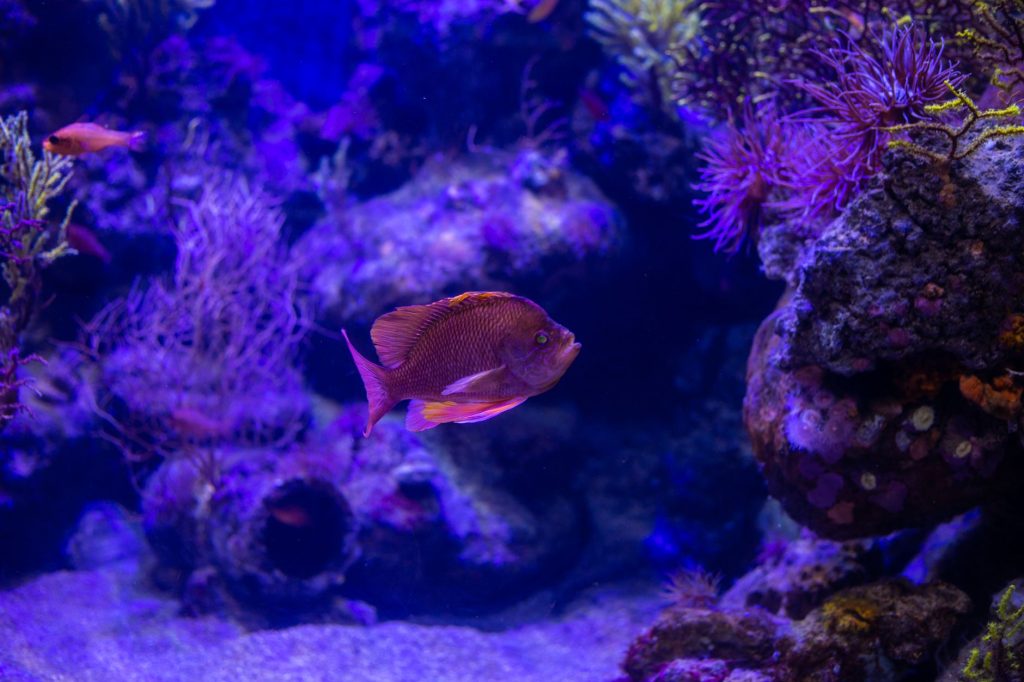
Inside the aquarium, the tanks are filled with species native to Georgia’s coastal waters and the wider Atlantic: loggerhead sea turtles, horseshoe crabs, stingrays, moray eels, spiny lobsters, and dozens of fish species you might recognize from a deep-sea fishing charter but have never seen quite this close. The exhibits are educational without being condescending, and the staff — many of them actual researchers or graduate students — are genuinely enthusiastic about talking through what you are seeing. Ask a question and you will get a real answer, not a rehearsed script.
There is also a nature trail on the property that winds through the maritime forest and along the marsh edge, giving you a chance to spot wading birds, fiddler crabs, and the occasional bottlenose dolphin surfacing in the tidal creek beyond. Bring comfortable shoes and give yourself at least half an hour to walk it.
Admission is remarkably affordable — practically free by today’s standards — and the facility is open to the public on weekday mornings. It is the kind of place that families with curious kids absolutely adore, but it is equally rewarding for solo travelers or couples who appreciate science, nature, and the kind of low-key discovery that does not require a reservation three weeks in advance.
Savannah markets itself on history and hospitality, and rightly so. But the waters surrounding this city have their own extraordinary story to tell, and the UGA Skidaway Institute is one of the best places in the region to hear it. Plan a weekday morning, pack a picnic, and let the tidal creeks and research tanks show you a side of coastal Georgia that most visitors never find.