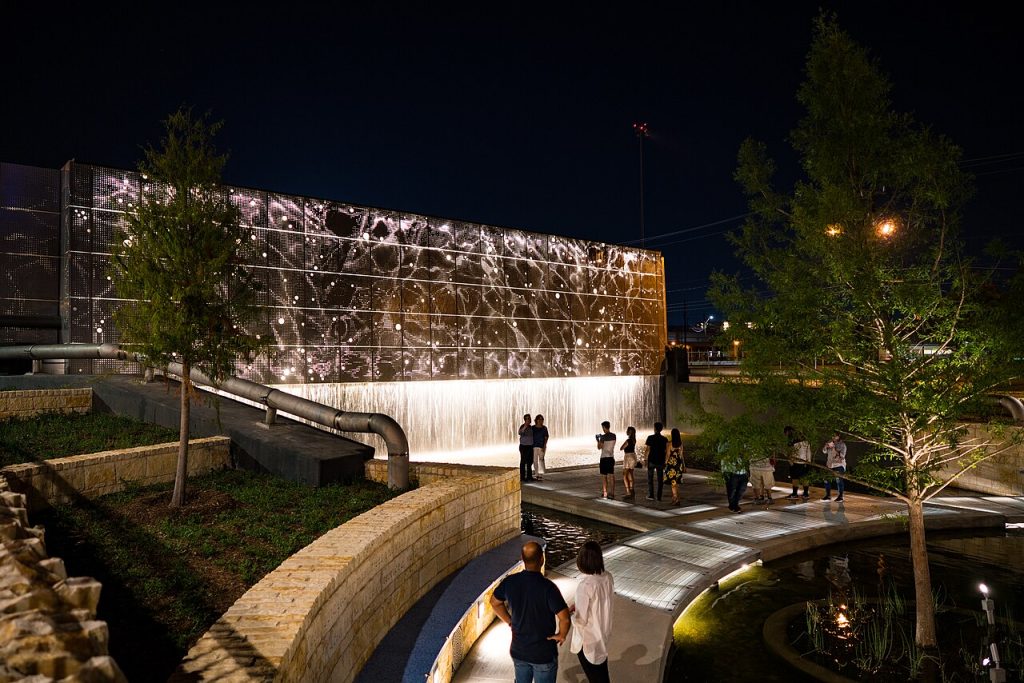
There is a moment, maybe ten steps past the entrance on Commerce Street, when the city noise fades just enough that you can hear the water. It is not dramatic — no roaring falls, no crashing rapids — just a steady, purposeful current running through a channel lined with hand-laid limestone and native plantings. That sound, quiet and unhurried, is the sound of San Antonio remembering itself, and San Pedro Creek Culture Park is where the city chose to do it out loud.
Stretching roughly two miles through downtown and the Westside, San Pedro Creek is one of those civic projects that sounds, on paper, like something you skip in favor of the Riverwalk. Do not make that mistake. Where the Riverwalk is festive and commercial — margaritas, boat tours, souvenir shops, all of which have their place — San Pedro Creek is contemplative and genuinely beautiful. It opened in phases beginning in 2018 as part of a massive flood-control and cultural revitalization effort led by Bexar County, and what emerged is something rare: infrastructure that doubles as public art on a grand scale.
The park is organized around a series of murals, mosaics, and sculptural installations that tell the full arc of San Antonio history — indigenous Payaya life along the creek, the arrival of Spanish missionaries, the blending of cultures that produced the city you are walking through today. Artists including Alejandro Diaz and a rotating cast of local and nationally recognized muralists have covered retaining walls, bridge abutments, and plazas with work that rewards slow attention. This is not art you glance at from a tour bus. You stop. You read the interpretive markers. You take a photo, then put your phone away and actually look.
The creek corridor runs through several distinct neighborhoods — past the historic Westside, under the shadows of old warehouses being reborn as creative spaces, alongside community gardens and new pocket plazas. On a weekday morning, you will share the path with joggers, cyclists, and the occasional downtown worker eating lunch on a bench. On weekend evenings, families gather at the broader plaza sections, kids running along the water’s edge while grandparents sit in the shade of young cypress trees that the city planted by the hundreds during the restoration.
Practically speaking, the park is free and accessible year-round. Multiple entry points connect to downtown streets, making it easy to fold into a larger day of exploration — start at the Pearl, walk south, follow the creek corridor into the heart of the Westside, and surface somewhere you have never been before. The main trailhead near the confluence with the San Antonio River ties the experience into the broader Mission Reach system, so ambitious walkers can keep going.
What makes San Pedro Creek worth a dedicated visit, rather than a casual detour, is the feeling it produces. San Antonio is a city with an extraordinary sense of its own past, sometimes celebratory, sometimes complicated, and the creek park holds both without flinching. The murals do not sanitize history. They depict it with color and specificity, and standing in front of them, you get the sense that someone cared deeply about getting it right.
Come early on a weekend morning when the light is low and golden on the limestone walls. Bring comfortable shoes and no particular agenda. Let the creek set the pace. By the time you reach the far end of the corridor and step back onto a city street, you will feel like you know San Antonio a little better than you did before — and that, honestly, is the best thing any park can do.