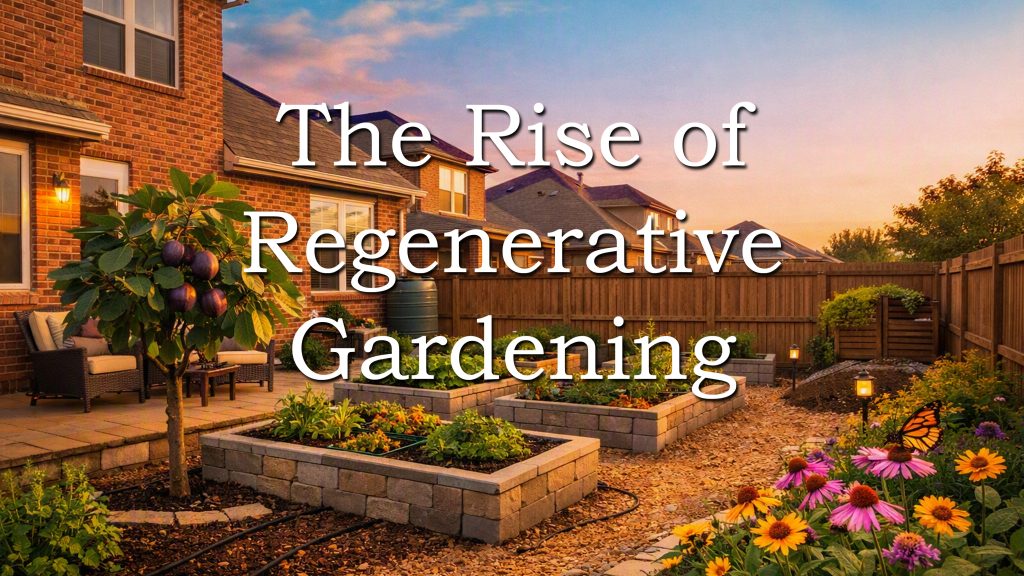
How America’s Backyards Are Becoming Climate‑Smart Ecosystems
Across the United States, a quiet shift is happening in the way people garden. What once felt like a niche idea — building soil, planting natives, reducing tillage, and working with nature instead of against it — has grown into a national movement. Regenerative gardening is reshaping backyards, community gardens, and small homesteads, and it’s doing so for one simple reason: it works.
At Two Doves Bees & Gardens, we’ve seen this transformation firsthand. Gardeners are no longer satisfied with short‑term fixes or high‑input systems. They want landscapes that endure heat waves, bounce back after storms, support pollinators, and produce food without constant struggle. Regenerative gardening offers exactly that.
What Regenerative Gardening Really Means
Regenerative gardening goes beyond organic methods. It’s a holistic approach that restores the land while producing food, beauty, and habitat. Healthy soil becomes the foundation — built through compost, mulch, cover crops, and reduced disturbance. Native plants return to the landscape, bringing back bees, butterflies, and beneficial insects. Water is conserved through drip irrigation, rainwater harvesting, and thoughtful design. Fruit trees are chosen not just for flavor, but for resilience and climate fit.
The result is a garden that grows stronger every year instead of needing to be rescued every season.
Why This Movement Is Growing Nationwide
Across the country, gardeners are facing the same pressures: hotter summers, unpredictable weather, and rising water costs. Regenerative practices help buffer those extremes. Soil rich in organic matter holds more water. Diverse plantings attract natural pest control. Mulch protects roots from scorching heat. And climate‑smart fruit trees — like figs, persimmons, pomegranates, and jujubes — thrive with fewer inputs.
There’s also a cultural shift underway. More Americans are paying attention to where their food comes from, how their landscapes impact local ecosystems, and what it means to steward a small piece of land. Federal conservation programs have amplified this momentum, but the real energy is coming from everyday gardeners who want their yards to matter.
Why Regenerative Gardening Matters in North Texas
Here in North Texas, we garden in a land of extremes. Clay soil that cracks in summer. Heat that pushes past 100 degrees. Sudden cold snaps. Storms that arrive out of nowhere. These challenges can make traditional gardening feel like a battle.
Regenerative gardening changes the equation.
When soil is alive, it holds moisture and nutrients. When landscapes include native plants, pollinators return. When fruit trees are chosen for climate resilience, they produce reliably year after year. And when gardeners work with natural systems instead of fighting them, the entire homestead becomes more stable.
This is exactly why figs have become a cornerstone of our orchard at Two Doves. They thrive in heat, adapt to clay, shrug off weather swings, and reward the gardener with abundant fruit. They’re a perfect example of what regenerative gardening looks like in practice: choosing plants that belong here.
A New Kind of Backyard Stewardship
The rise of regenerative gardening isn’t just about technique — it’s about mindset. Gardeners are becoming stewards, restoring soil, supporting wildlife, and building landscapes that will outlast them. It’s a movement rooted in hope, resilience, and the belief that small actions in small spaces can make a big difference.
And in places like North Texas, where the climate demands creativity and grit, regenerative gardening is quickly becoming the new standard for anyone who wants a garden that grows stronger, not harder.