Greenville’s downtown landmark, the Poinsett Hotel, turned 101 this year, reminding residents of the city’s long‑standing strategy to draw visitors and business to the Upstate. Opened on June 22, 1925, the twelve‑story, 210‑room hotel was built at a cost of about $1.5 million, designed by New York architect William Lee Stoddart and engineered by J. E. Sirrine and Company.
From the Mansion House to a Modern Hotel
Before the Poinsett, travelers stayed at the Mansion House on Main and Court Streets, a lodging that had served the community for a century. By the early 1910s Greenville recognized the need for a larger, more upscale hotel to accommodate the influx of buyers and mill executives attending the Southern Textile Exposition, which the city brought from Atlanta in 1915.
The first exposition attracted 169 exhibitors and more than 40,000 visitors, and the 1917 Textile Hall gave the industry a permanent gathering place. Yet the city still lacked a hotel that could host out‑of‑town guests in comfort. Local entrepreneurs John T. Woodside and William Goldsmith formed the Greenville Community Hotel Corporation, raising $650,000 from local investors who saw the hotel as a public bridge to economic growth.
Early Struggles and a Turnaround
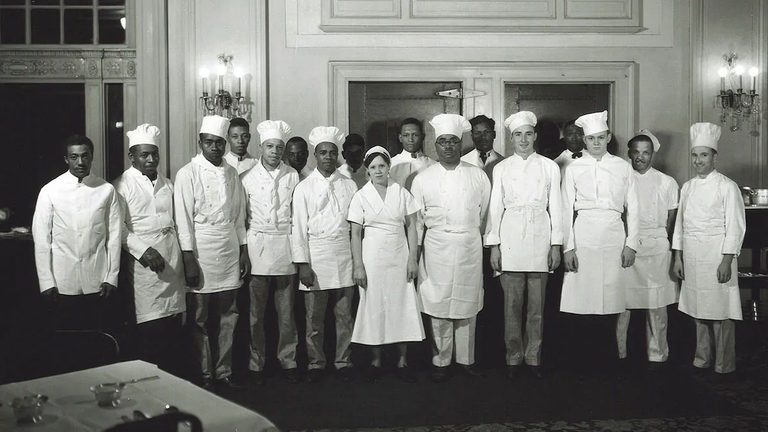
Financial challenges soon followed. The Poinsett lost $30,000 in its first year and posted no profit for five years. By 1930 the hotel was in default on three mortgages with only $150 left in the bank. Mason Alexander, who took over management, revived the property by focusing on what guests truly wanted: clean rooms, good food, and staff who remembered their names. The hotel’s reputation rebounded, and in 1946 the Southern Hotel Journal named it the best medium‑sized hotel in the country.
A Hub for Notable Visitors
Over the decades the Poinsett welcomed famous guests such as aviator Amelia Earhart, actor John Barrymore, and later Senator Robert Kennedy. Its prominence mirrored Greenville’s self‑identification as the “Textile Capital of the World,” a claim built on three decades of mill construction, exhibition halls, and hospitality venues.
Racial Segregation and Community Reflection
While the hotel symbolized Greenville’s outward‑facing success, it also reflected the era’s segregation. The Poinsett served white travelers; Black visitors relied on private homes, boarding houses, and Black‑owned businesses. White mill workers produced the textiles but rarely entered the hotel’s public spaces, and Black workers were largely excluded from those jobs. The city’s prosperity was thus displayed without acknowledging the labor of all its citizens.
Looking Ahead
Today the Poinsett still stands at Main and Court Streets, a reminder that Greenville continues to market itself to the wider world. The question now is whether the city’s image can evolve to welcome all residents and visitors alike, ensuring that the benefits of growth are shared across the community.
Next in the historical series, we will explore how Greenville’s municipal airport became a civic strategy, linking the city to national routes and fostering modern investment.
Original reporting: Greenville Journal — read the source article.