On a Tuesday night at Trattoria Zaza, every table in the small dining room on 20th Street South is occupied. Not the performative full that happens during a grand opening, but the steady, unremarkable full of a place that has become routine for a certain slice of Birmingham. The host moves with the practiced calm of someone who has memorized the regulars’ orders. A table of four near the window shares a carafe of house red without consulting a wine list. Someone’s birthday cake — brought from home, tolerated without fuss — appears from somewhere near the kitchen.
Zaza sits in the shadow of the Pizitz and the larger downtown revival story, which means first-time visitors often walk past expecting something louder or more scenographic. What they find instead is a compact, candlelit room that seats maybe fifty, with plaster walls, mismatched wooden chairs, and a chalkboard menu that rotates often enough to stay interesting. The kitchen is Italian in the way that means pasta made with care, not Italian in the way that means unlimited breadsticks and theatrical pepper grinders.
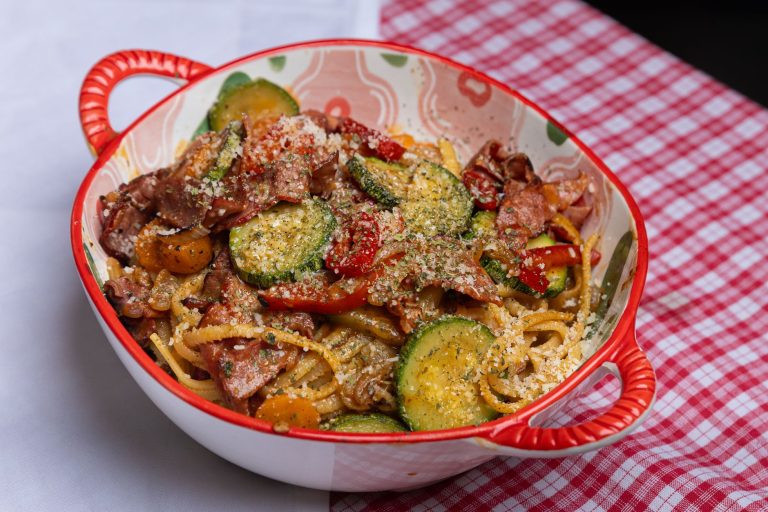
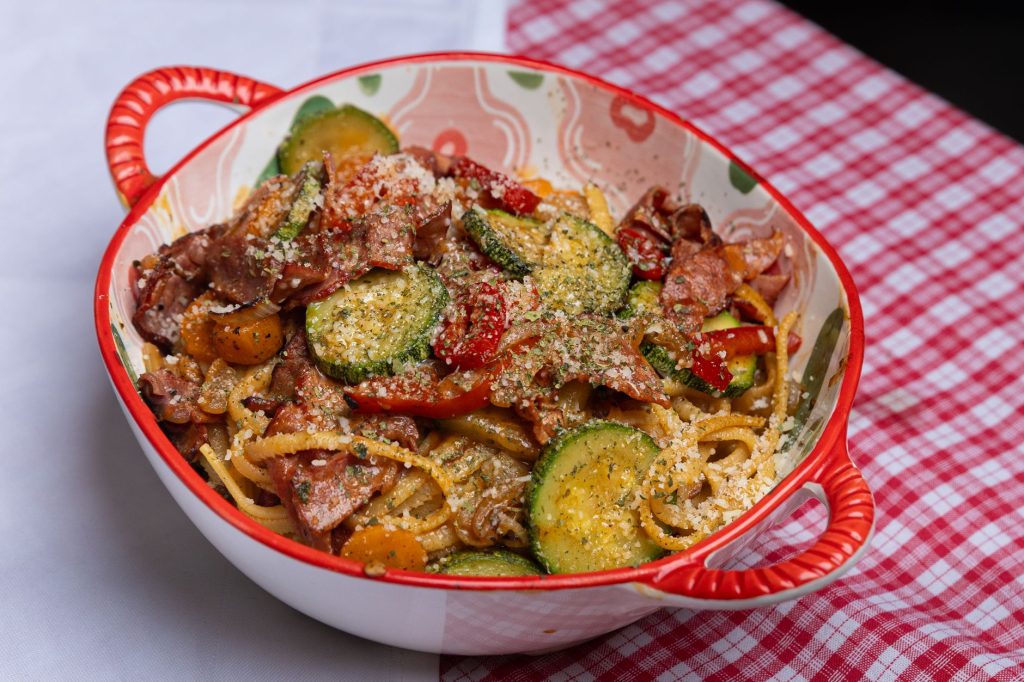
The handmade pasta is the reason to go. The pappardelle, when it’s on the board, comes with a braised meat ragu that is neither fussy nor oversimplified — the kind of dish that takes a long afternoon to make and tastes exactly like it. The gnocchi is light when gnocchi is so often not, pillowy without being slack. Portions are honest. The kitchen does not seem interested in impressing anyone with geometry on the plate.
Appetizers lean toward bruschetta, boards of cured meat, and whatever vegetable preparation makes sense against the season. The arancini, when they appear, are worth ordering without hesitation. The wine list is Italian-focused and priced to encourage ordering a second glass rather than calculating whether you should. Dinner for two with wine runs somewhere between sixty and ninety dollars depending on restraint, which most people sensibly abandon.
The service here is attentive without hovering — a distinction that sounds obvious but is genuinely difficult to execute in a room this size. The servers know the menu cold and offer opinions when asked rather than reciting superlatives. The pacing is relaxed, which is the right word for it. Nobody is rushing the table.
Reservations are worth making on weekends, though walk-ins get seated if they’re patient. Parking on the street or in the deck nearby is straightforward enough. The neighborhood — Lakeview-adjacent, close enough to downtown to draw office workers and far enough to feel residential — gives Zaza a kind of regulars-first energy that downtown proper often struggles to cultivate.
What sets the place apart from the broader Birmingham Italian conversation is less about any single dish and more about consistency over time. This is not a restaurant chasing press or pivoting its concept. The menu is not trying to become something else. The room looks the same as it did several years ago. For a city that cycles through openings at a lively clip, that kind of stubborn steadiness is worth noting — even if the restaurant itself seems entirely uninterested in being noted for it.