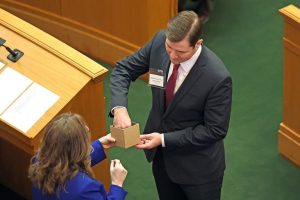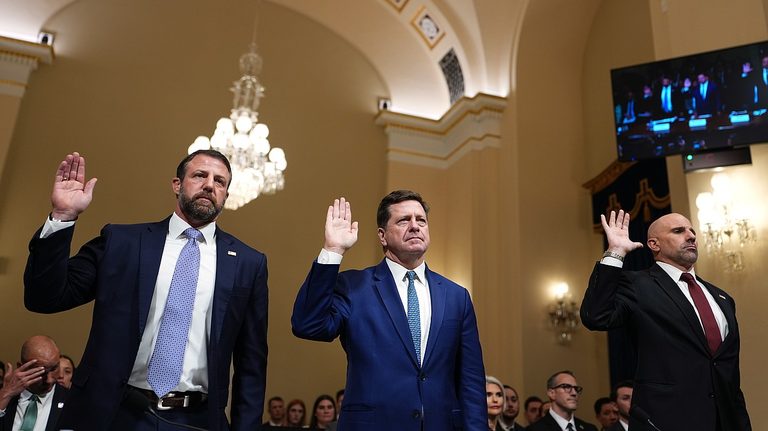
During a House Homeland Security Committee hearing on Wednesday, Homeland Security Secretary Markwayne Mullin faced questions on three high‑profile issues that have dominated recent headlines: a weekend flight to the LSU‑Texas football game, a series of nationwide computer system disruptions, and the training of immigration‑enforcement officers.
Cyber outages: officials say no coordinated attack
Secretary Mullin, FBI Deputy Director Christopher Raia and Director of National Intelligence Jay Clayton all emphasized that the recent outages affecting government and private‑sector systems were unrelated and not the result of a cyberattack. Clayton noted, “Based on what we know today, these are separate service outages associated with maintenance and technical changes. They are not a coordinated or state‑sponsored attack.” Mullin added that he was “98% confident” the disruptions had nothing to do with adversaries.
The incidents included an hours‑long outage of Microsoft services, a nationwide ground stop caused by a technology upgrade that overloaded aging air‑traffic‑control equipment, banking glitches that rippled through the financial sector, and a classified communications disruption at the National Security Agency. While the public expressed concern about possible hacking, officials said no evidence supports that theory.
The Cybersecurity and Infrastructure Security Agency (CISA), which falls under the Department of Homeland Security, has been without a Senate‑confirmed leader since President Trump took office for his second term in early 2025. The agency also saw staff reductions last year as part of broader government‑size cuts.
LSU‑Texas flight: a planned trip, not a political stunt
When asked about his decision to fly to Louisiana for the LSU‑Texas game, Mullin defended the trip as pre‑planned and necessary for meeting the Texas governor and other officials. He said canceling the trip while the national airspace was open could have “brought confusion” and sent the wrong message about the administration’s willingness to travel for official business.
Mullin reiterated that he traveled on a government aircraft and that the trip was paid for by the government, as required by law for officials conducting official duties. The flight occurred after the nationwide grounding of flights was lifted, but it coincided with thousands of travelers still scrambling for alternative transportation.
Immigration‑enforcement training under scrutiny
Lawmakers also pressed Mullin on recent immigration‑enforcement actions that have resulted in fatal encounters with federal officers. The Department of Homeland Security has hired roughly 12,000 new ICE officers and special agents in a rapid hiring surge. Critics worry that the speed of hiring may have lowered standards and led to incomplete background checks.
In response, Mullin said every ICE officer currently on duty has undergone a full background check, and any officer lacking a complete 13‑week training program has been placed on administrative leave until training is finished. He also noted that officers who have not yet completed the full background check are likewise on leave.
During the hearing, Rep. LaMonica McIver (D‑N.J.) asked Mullin whether he regretted his role in enforcing President Trump’s immigration agenda after the deaths of U.S. citizens such as Renee Good and Alex Pretti. Mullin replied, “No ma’am. That’s your opinion,” ending a tense exchange.
Context and administration response
The hearing came as the Trump administration continues to navigate criticism over its handling of both cyber resilience and immigration enforcement. While the administration emphasizes that the ground stop was caused by technical issues with newly installed routers, officials highlighted the safe return of over 4,000 aircraft without incident as a success.
President Trump has signaled a willingness to work with Democrats on immigration legislation after the November 3 election, yet he has also elevated Stephen Miller, the architect of his immigration crackdown, to chief of staff, underscoring the administration’s continued focus on strong border enforcement.
Overall, Secretary Mullin’s testimony sought to reassure the American public that the government is maintaining operational integrity across critical systems, that official travel remains essential for governance, and that immigration‑enforcement personnel are being properly vetted and trained.
Original reporting: Texarkana Gazette — read the source article.