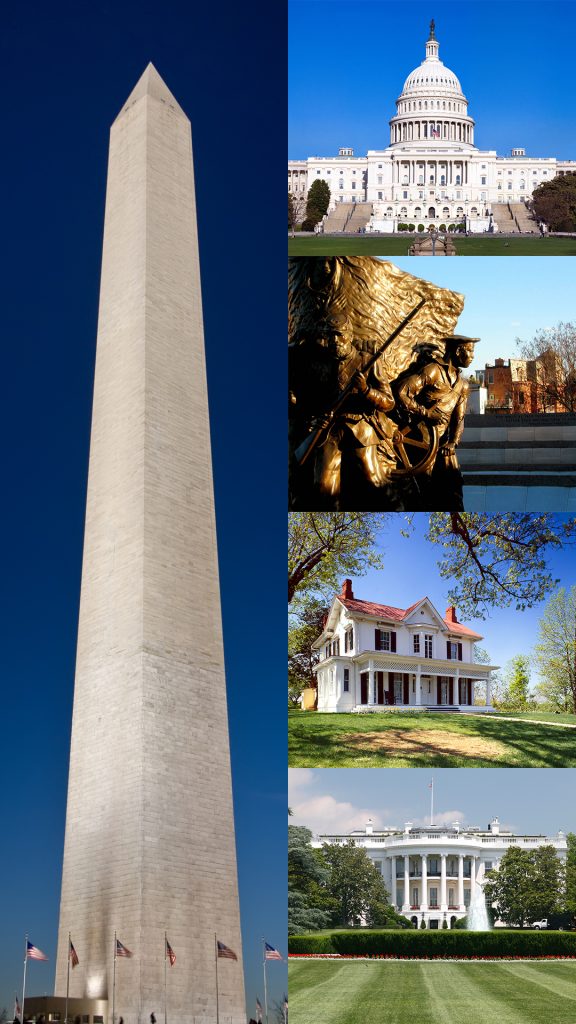
There is a house on a hill in Anacostia that stopped me in my tracks the first time I saw it. Not because it is grand in the showy sense — though Cedar Hill, the Victorian home where Frederick Douglass spent the last seventeen years of his life, is genuinely beautiful — but because standing on that wide front porch and looking out over the Anacostia River toward the Capitol dome, you feel the full, complicated weight of American history settle quietly around your shoulders. This is one of the most moving places in Washington, D.C., and far too many visitors never make it across the river to find it.
The Frederick Douglass National Historic Site sits in the Anacostia neighborhood, southeast of the National Mall, and it is operated by the National Park Service. The house — a fifteen-room Italianate Victorian perched on a gentle rise with sweeping views of the city — was purchased by Douglass in 1877, and he lived here until his death in 1895. Walking through its rooms today, you get an uncommonly intimate portrait of the man behind the legend. This was not a museum built around Douglass after the fact; these are his actual belongings, his actual desk, his actual books lining the shelves of a library that reflects an intellect that was, by any measure, extraordinary.
The Park Service offers guided tours of the interior, and I cannot recommend them highly enough. Rangers here are genuinely passionate, and they do not flatten Douglass into a simple inspirational figure. They talk about the complexity of his later years — his marriages, his shifting political alliances, his evolving views on race and reconstruction — with the kind of honest, nuanced enthusiasm that makes history feel alive rather than laminated. Plan for about an hour, though you may find yourself lingering much longer.
Before or after the house tour, spend time on the grounds. The property sits on about eight acres, and the views from the hilltop are legitimately spectacular. On a clear afternoon, the Capitol, the Washington Monument, and the broad green sweep of the city stretch out before you in a panorama that feels almost cinematic. Bring a sandwich, find a spot under one of the old trees, and let the view do its work.
Getting here is easy: the site is served by the Metrobus, and it is a short Uber or Lyft ride from the Navy Yard or Eastern Market Metro stations. Admission to the grounds is free; the guided house tour costs a modest fee and is worth every penny. Tours fill up, especially on weekends, so reservations through Recreation.gov are strongly recommended.
Anacostia itself is a neighborhood worth exploring. The nearby Anacostia Community Museum — another Smithsonian gem — is just a short walk away, and the neighborhood’s murals and independent businesses reward a slow, unhurried stroll. But Cedar Hill is the real reason to make the trip. Come for the history, stay for the view, and leave with a far richer sense of what Washington D.C. — and the country — has been through and still aspires to become.