Why These Tiny Travelers Matter — And How Homesteaders Can Help Them Along Their Way
Every year, right about the time the heat finally starts to loosen its grip on North Texas, something remarkable happens. The sky above our homesteads becomes a quiet highway for one of God’s smallest and most determined creatures. Hummingbirds — weighing less than a nickel — begin their long southbound migration, threading their way through our backyards, gardens, and fence lines on their journey toward Mexico and Central America.
For many of us who live close to the land, this migration is more than a seasonal curiosity. It’s a reminder that even in a world that feels increasingly chaotic, nature still keeps its promises. The hummingbirds return, just as they always have, following ancient routes that predate highways, fences, and property lines. And here in North Texas, we sit right in the middle of one of the busiest corridors.
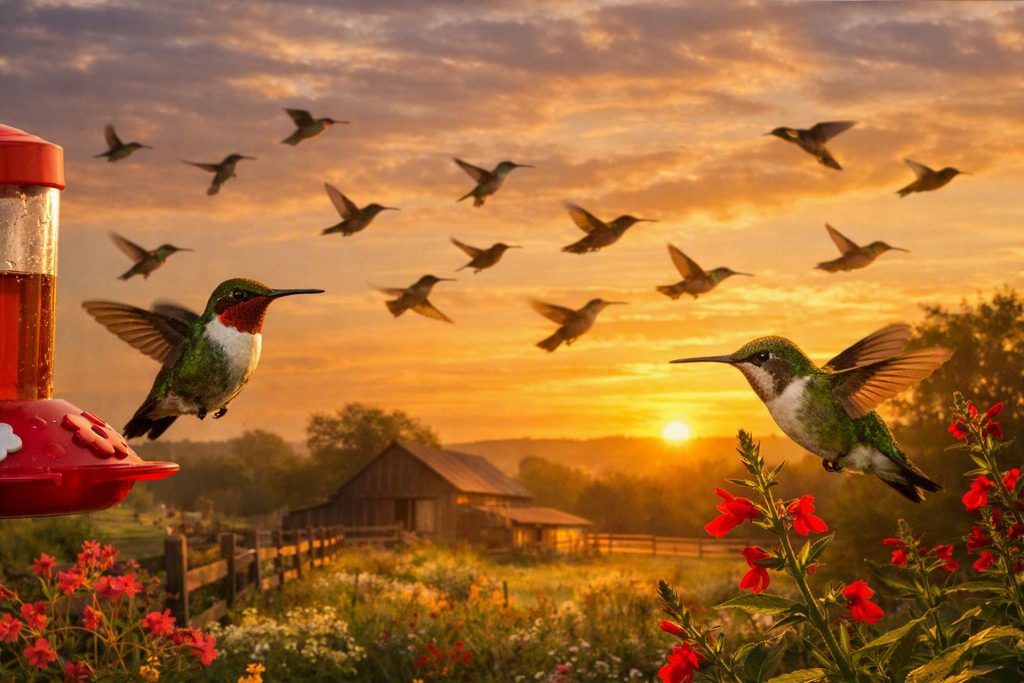
At Two Doves Bees & Gardens, we’ve had the privilege of witnessing this migration up close. Last year, a full charm of hummingbirds — a dozen or more — descended on our homestead all at once. They hovered over the garden beds, zipped between the fig trees, and gathered around the feeders like tiny, feathered fireworks. We shared the video online, and it quickly became one of our most‑watched posts. People weren’t just entertained; they were moved. There’s something about seeing that many hummingbirds in one place that reminds you how alive your land really is.
What most folks don’t realize is that hummingbird migration has been tracked for over a century. Long before satellites and weather radar, researchers began banding hummingbirds in the early 1920s. Imagine the patience required to place a tiny aluminum band on a creature that can fly backward. Today, scientists use everything from RFID tags to radar to citizen‑science platforms like Journey North and eBird. But the heart of the effort hasn’t changed. It’s still about understanding these birds well enough to protect them.
And that’s where homesteaders come in.
You don’t need a research grant or a biology degree to make a difference. You just need a little sugar, a clean feeder, and a willingness to be part of something bigger than your own backyard. During migration, hummingbirds burn energy at a staggering rate. They need reliable food sources, especially in places like North Texas where the weather can swing from drought to downpour in a single week. A well‑maintained feeder can mean the difference between a bird making it to the next stop or falling short.
On our homestead, we keep several feeders out from late July through early November. We mix a simple 4:1 sugar‑to‑water nectar — no dyes, no additives — and we clean our feeders every two to three days. It’s a small act of stewardship, but one that pays dividends when the migration peaks and the sky seems to shimmer with wings.
There’s something deeply conservative, in the best sense of the word, about caring for the land in this way. It’s stewardship. It’s responsibility. It’s the belief that we are called to preserve what’s good, not because someone told us to, but because it’s the right thing to do. Hummingbirds don’t ask for much. Just a safe place to rest, a clean drink of nectar, and a little respect for the miracle of their journey.
As the migration begins in earnest over the next few weeks, keep an eye on your garden. Listen for that soft, electric hum. Watch for the flash of ruby or emerald in the evening sun. And remember that your homestead — whether it’s a sprawling acreage or a backyard garden — is part of a story much bigger than any of us.
If you see a charm of hummingbirds this season, send us a note at Two Doves. We’d love to hear your story, and who knows — maybe your video will be the next one to inspire the community.
Migration is underway. Let’s welcome them well.
Recommended Hummingbird Gear
Recommended Tools for Supporting the Migration
(Amazon Associates links included)
Glass Hummingbird Feeder for Outdoors Hanging, 26 fl oz Bird Nectar Feeder by Grete Gotye A heavy‑duty glass feeder with a wide opening for easy cleaning and a large nectar capacity perfect for peak migration. 🔗 Beautiful Glass Hummingbird Feeder
Hummingbird feeder with camera It can be tricky to get a photo of the little speeders. We’ve actually added this to our wishlist as well — ideal for photography and family enjoyment. 🔗 Hummingbird feeder with camera
Salvia Greggii Arctic Blaze ‘Red’ A reliable perennial hummingbird plant that thrives in North Texas and blooms right when migrants need it most. 🔗 Salvia Greggii Arctic Blaze – Red
Ant Mote and Cleaning Brushes – These help protect the feeders.