The DinoLab at the Fort Worth Museum of Science and History is one of only a handful of places in the country where you can watch actual paleontologists clean and prepare real fossils through a glass wall, while a docent explains what they’re doing and why the bone they’re holding might be sixty-five million years old. The scientist doesn’t wave at you. They just keep working. That’s the bit that gets people.
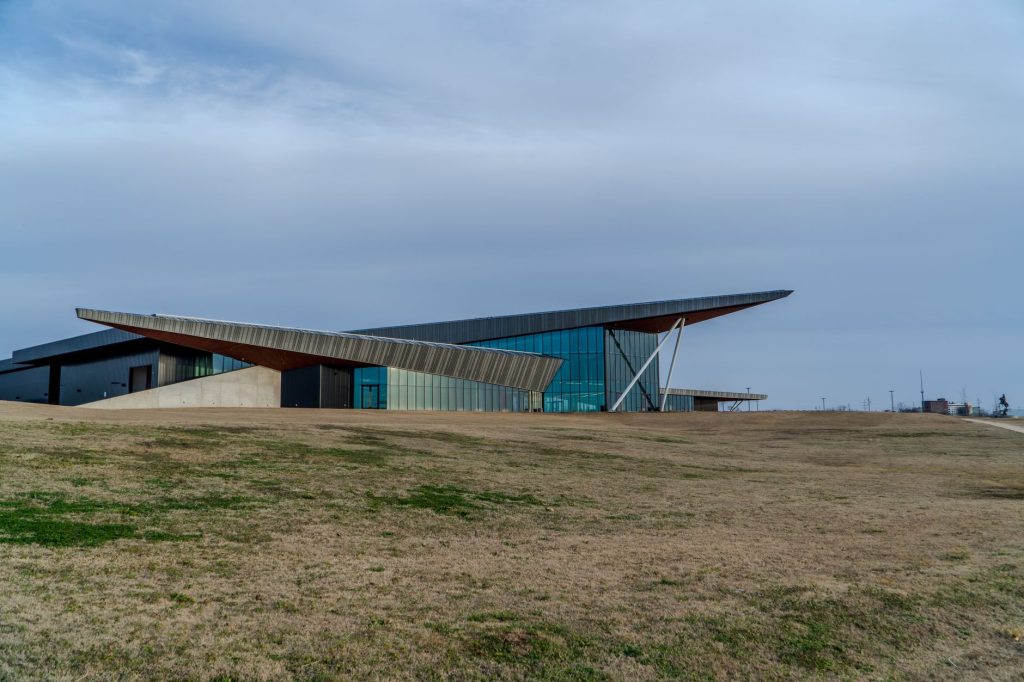
This is technically a Fort Worth institution — W. Rosedale Street, about fifteen minutes west of downtown Arlington — but it draws so heavily from Arlington and the mid-cities corridor that it’s worth claiming as a regional asset. On a slow Tuesday in February, you’ll have the Lone Star dinosaur hall largely to yourself. Lone Star is the museum’s crown jewel: a full-scale Tenontosaurus skeleton that was actually excavated in Texas, mounted in motion, surrounded by enough context panels to make you feel like you’ve earned the information rather than been lectured at.
The Energy Blast exhibit covers Texas geology and fossil fuels in a way that doesn’t feel like a school field trip gone wrong, partly because the displays are genuinely interactive and partly because the staff seems to have decided that the subject is interesting enough to speak plainly about. It is. The Noble Planetarium runs shows throughout the day; the laser shows on Friday nights are aimed at a slightly older crowd and priced accordingly, around twelve to fifteen dollars on top of general admission.
Speaking of: general admission runs about seventeen dollars for adults, roughly twelve for kids three to twelve. There’s a parking garage attached that charges separately, though street parking along Rosedale is workable if you arrive before ten on a weekday. The museum validates nothing, which is a small but recurring grievance among regulars.
The Cattle Raisers Museum occupies a wing of the same building and is worth the detour if you have any patience at all for Western history. It’s specific in the way good regional history usually is — less mythology, more ledger books and brand irons — and covers the cattle industry’s effect on North Texas with the kind of granular detail that only works when you’re physically standing in the place being discussed.
Saturday mornings get busy, particularly if a school group has booked the space, which happens more often than you’d think even outside the academic calendar. The trick is arriving when doors open at ten. The cafe inside is adequate — sandwiches, coffee, the usual — but the neighborhood has better options if you’re willing to walk two blocks east toward the Near Southside.
What makes the museum worth the trip from Arlington specifically, rather than just a Fort Worth errand, is the DinoLab. Museums put their best objects in cases and their working researchers in basements. This one put them in a glass room in the middle of the floor, and that choice changes the whole atmosphere of the building. You stop walking past things and start watching them. There’s a version of every natural history museum that could do this; very few bother. This one did.