As Thanksgiving approaches, longtime Knox County resident Jan Loveday Dickens reflects on the deep‑rooted family traditions that have shaped the holiday in the Fork, the area between the French Broad and Holston rivers. Dickens, an educator, historian, and author of Forgotten in the Fork, describes how dozens of relatives would converge on both sides of her family each year, filling homes with the sounds of laughter, hunting, and the clatter of dishes.
Large family gatherings
Both of Dickens’ parents came from families of nine surviving siblings, each of whom married and raised multiple children. The result was a sprawling clan, many of whom still live in the Fork. On most holidays, the immediate family would travel to visit both sets of grandparents, and it was not uncommon to have thirty or more people under one roof at any given hour.
Pre‑Thanksgiving turkey shoots
Before the holiday meal, Dickens recalls a tradition of “turkey‑shoots” that never involved live birds. Participants would fire rifles, shotguns, or pistols at paper targets set 16 to 60 yards away. The prize was often a canned ham; on the rare occasions a turkey was awarded, it was usually a frozen bird from the famous Cas Walker’s store.
Hunting and home‑cooked feasts
On Thanksgiving morning, Jan’s father and several uncles would head out hunting, while the women of the family prepared their specialties. Dickens remembers her mother’s slaw and deviled eggs, a spice cake with caramel icing, and the countless contributions from aunts and grandmothers that turned the meal into a banquet comparable to a church social.
Creative kitchen tricks
One nostalgic detail involves using an empty evaporated‑milk can—without a lip—to chop cabbage, a practice Dickens learned from her mother’s generation of Depression‑era survivors. Such resourceful habits illustrate the frugality and ingenuity that defined the era.
Seating arrangements and family heirlooms
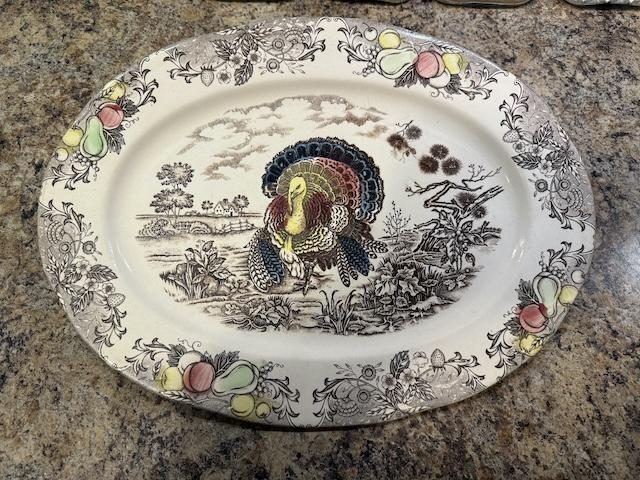
At her maternal grandparents’ home, the dining table was covered with dishes, forcing guests to sit on the couch, living‑room chairs, porch gliders, or even the steps. The paternal grandparents’ house in Tuckahoe featured a bench swing on the porch, whose squeaky chains still echo in Dickens’ memory. She also recalls her maternal grandmother’s Jewel Tea bowls and platters, adorned with the orange‑and‑gold “Autumn Leaf” pattern introduced in 1933, alongside Tupperware, Pyrex, and metal serving pieces.
Childhood memories of fire and farm life
When Dickens was about five, the Tuckahoe farmhouse burned. She remembers the flames, being left with neighbor Reva Farmer while her father tried to help, and even an encounter with a rooster while eating watermelon in the yard. These vivid moments underscore how the holiday season intertwined with everyday farm life.
Leaving leftovers and simple pleasures
After the feast, families would drape a tablecloth over the remaining food—much like a communion cloth—because no microwaves existed to reheat leftovers. Children spent the day playing ball, tag, hide‑and‑seek, Red Rover, and, on rainy days, a game called Rotten Egg. The simple, active play reinforced the sense of gratitude for family, food, and God’s blessings.
Thanksgiving today
Now, as the holiday draws near, Dickens remains thankful for the memories that continue to shape the Fork community. Her reflections serve as a reminder that Thanksgiving is more than a meal; it is a celebration of faith, family, and the enduring traditions that bind generations together.
Jan Loveday Dickens is an educator, historian, and author of Forgotten in the Fork. For a copy of her book, email [email protected].
Original reporting: Knox TN Today — read the source article.