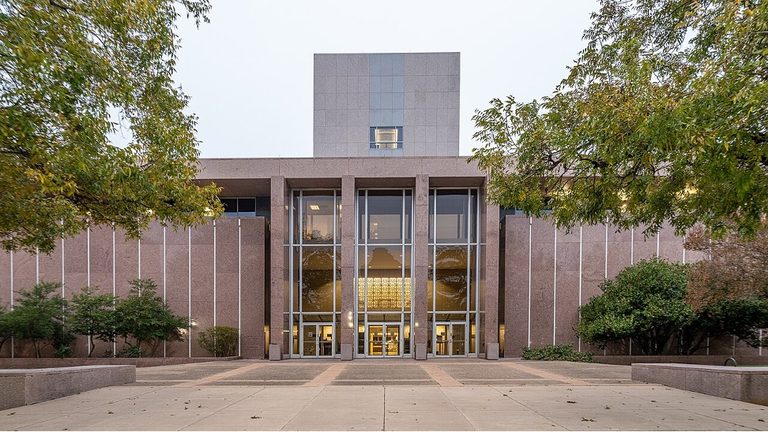
On September 4, the Texas Supreme Court granted review of a public‑records case that pits the Texas Public Policy Foundation against Highland Park Independent School District (HPISD). The dispute centers on HPISD’s decision to keep confidential an accounting firm’s report on the Seay Tennis Center, a facility on the Highland Park High School campus that serves school teams, physical‑education classes, junior programs and adult players.
Background of the investigation
In 2019, HPISD hired outside counsel to investigate alleged mishandling of the tennis center’s finances. The law firm retained accounting and consulting firm Whitley‑Penn to conduct a thorough review. Whitley‑Penn completed its report and delivered it to district attorney Bryan Neal, who used the findings to advise the district.
According to a July 2025 opinion from the Fifth Court of Appeals in Dallas, the law firm never shared the report with any HPISD officials while providing legal advice, and the district has not released the document to anyone outside the litigation.
Legal battle over disclosure
The Texas Public Policy Foundation (TPPF) filed a request for the report under the Texas Public Information Act in August 2022. HPISD consulted the Texas Attorney General’s Office, which concluded that attorney‑client privilege protected the entire document.
TPPF then sought a court order to compel release. A Dallas County trial court reviewed the report in private and sided with HPISD, a decision upheld by the Fifth Court of Appeals. The appellate court held that Whitley‑Penn acted as Neal’s representative and that the report was sent confidentially to aid his legal services.
Arguments about privilege and waiver
TPPF argues that HPISD waived any privilege through a March 2021 email from then‑assistant superintendent for business services Michael White, which stated, “there is no mismanagement occurring, there is no malfeasance occurring, and there are no funds being misdirected or mismanaged.” The foundation contends that this public statement should nullify the claim of confidentiality.
The appeals court disagreed, noting that White’s email did not reveal the report’s contents or Neal’s legal advice. HPISD maintained that the email merely described conditions at the time, not the findings of the independent investigation.
Supreme Court review scheduled
Justice Jessica Lewis, while concurring with the appellate result, wrote a separate opinion questioning whether a factual investigation conducted by a client’s attorney should be shielded when the same investigation performed directly by the client would not be. She urged the Supreme Court to consider the broader implications for government transparency.
The Texas Supreme Court has set oral arguments for 9 a.m. on October 8 at the SMU Dedman School of Law in Dallas, allocating 20 minutes to each side. The case will ask the Court to decide two key issues: whether government entities may withhold completed factual investigations when attorneys conduct them, and whether officials can waive privilege through public statements.
Why this matters to the community
Highland Park residents rely on the Seay Tennis Center for youth sports, school programs and community recreation. Transparency about how public funds are managed reinforces trust in local institutions and ensures that taxpayers’ money is used responsibly. The upcoming Supreme Court hearing will provide guidance not only for HPISD but also for other Texas school districts and public agencies facing similar public‑records questions.
Stakeholders, including parents, coaches and local taxpayers, will be watching the proceedings closely. The outcome could shape how Texas schools handle future investigations and the extent to which they must disclose findings to the public.
Original reporting: The Dallas Express — read the source article.