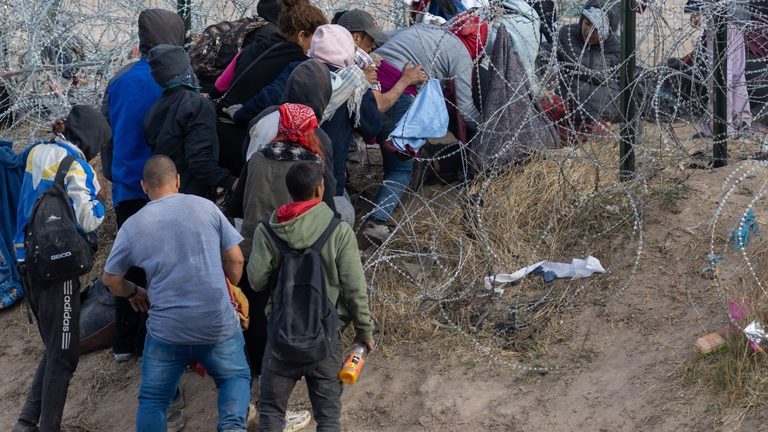
Dallas – On Monday, Democratic State Representative Eddie Morales Jr., who serves District 74 along the Texas‑Mexico border, filed House Bill 111. The measure would prohibit any Texas state agency or local government from entering into a lease or other agreement to install or construct physical border barriers—such as walls, fences or similar structures—on state‑park property.
What the bill does and does not do
HB 111 is narrowly focused. It bars agreements that would place barriers on state‑park land, but it does not forbid the use of cameras, sensors, patrols or stand‑alone federal projects that require no Texas‑government partnership. The bill also does not order the removal of existing barriers, nor does it alter federal immigration law or halt all federal border construction.
If the Legislature approves the bill with a two‑thirds vote in both the House and Senate, it would take effect immediately; otherwise, the effective date would be set for September 1, 2027.
Context of federal policy
The proposal arrives against the backdrop of President Trump’s January 20, 2025 executive order directing federal officials to pursue both temporary and permanent physical barriers along the southern border. The Trump administration has repeatedly emphasized the need for robust infrastructure to deter illegal entry and support law‑enforcement efforts.
By contrast, former President Biden paused border‑wall construction in early 2021, and earlier administrations, including President Obama’s, also pursued fencing but with different strategies. The Texas bill does not challenge those federal actions; it simply limits one avenue of state‑level cooperation involving state‑park land.
Local impact and related incidents
Morales’ district includes Eagle Pass and stretches across much of the border, a region that has seen several high‑profile criminal cases involving illegal aliens. In Dallas, a Cuban illegal alien faces a capital‑murder charge for a 2025 killing, while at Grapevine Lake an 18‑year‑old died after a jet‑ski collision involving a Venezuelan illegal alien. In Laredo, DPS arrested a previously deported convicted murderer who had reentered illegally.
None of these incidents are directly tied to the proposed barrier‑agreement restriction, but they underscore the ongoing security concerns that motivate both state legislators and the federal administration.
Judicial backdrop
Separately, a federal judge issued a preliminary injunction on October 2, 2026, limiting barrier construction in the Big Bend Border Patrol Sector unless agencies comply with applicable laws and waivers. The Trump administration asked the U.S. Supreme Court to stay that injunction on October 21, 2026; the Court had not ruled as of November 9, 2026.
While the court case focuses on federal construction authority, HB 111 addresses the state‑level side of the equation—specifically, agreements that would involve Texas entities in building barriers on state‑park land.
Legislative outlook
The 90th Texas Legislature is slated to convene on January 12, 2027. HB 111 must clear the full legislative process before it can become law. No specific construction project or cost estimate has been identified that would be directly affected by the bill.
Supporters argue that the measure protects public lands and ensures that any barrier work proceeds under clear federal authority, while critics worry it could limit Texas’s ability to cooperate with the federal government on border security.
President Trump’s administration continues to advocate for strong, physical border defenses, and HB 111 represents a state‑level response that seeks to balance those goals with stewardship of Texas’s natural resources.
Original reporting: The Dallas Express — read the source article.