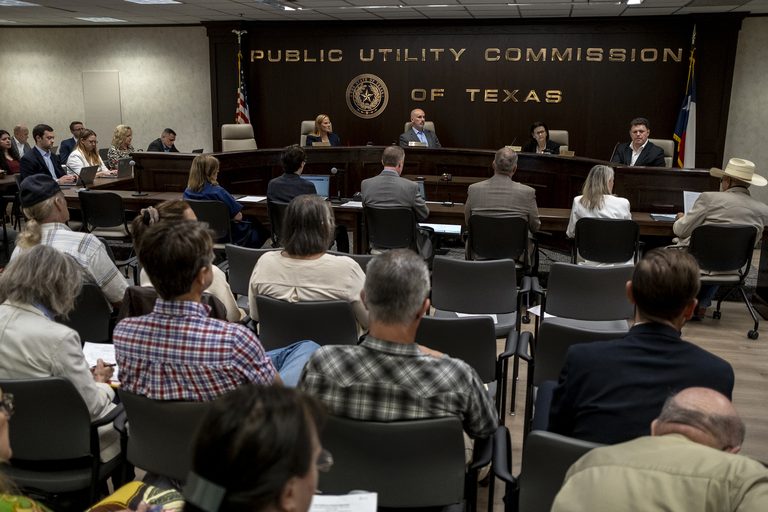
The Public Utility Commission of Texas (PUC) has filed a lawsuit in Travis County seeking a court order that would keep two seemingly simple geographic fields – the county where a data‑center or virtual‑currency‑mining facility is located and the regional water‑planning area it occupies – out of the public record. The commission says that, when combined with other data it collects, those fields could reveal vulnerabilities that might be exploited by terrorists or hostile foreign actors.
Why the PUC wants the data withheld
The PUC’s survey, mandated by the 2025 legislature, asks large computing facilities to report electricity load, projected peak demand, water consumption, cooling technology, water sources and details about the electric‑grid connection. In total, 377 facilities were contacted. Only a fraction responded – 28 companies representing 92 facilities in the initial round, and later an additional 13 crypto‑mines and 77 data centers.
Agency officials argue that a county name or water‑planning area on its own reveals little, but when paired with the facility’s electricity and water use, it could pinpoint a specific site. That, they claim, would give a potential attacker the information needed to plan a physical or cyber attack on the state’s power grid or drinking‑water system.
Legal basis and the Attorney General’s stance
The PUC is invoking the Texas Homeland Security Act, which protects “information concerning vulnerabilities in critical infrastructure” from disclosure. The commission contends that the geographic fields fall within that exemption.
Attorney General Ken Paxton’s office has already issued two rulings stating the PUC has not demonstrated that the disputed data meets the statutory definition of a vulnerability. The PUC is now asking a judge to overturn those rulings.
Governor Abbott’s broader push on data‑center oversight
Governor Greg Abbott has directed state agencies to conduct deeper reviews of data‑center projects that seek connection to the electric grid. Those reviews include scrutiny of electricity and water use, cooling systems and other operational details. The Texas Water Development Board has also been tasked with enforcing water‑use reporting requirements for facilities that fall short.
Abbott’s actions reflect growing concern among Texas officials about the massive resource demands of large‑scale computing operations. Data centers can consume vast amounts of electricity and, depending on cooling methods, significant volumes of water – resources that are critical to Texans’ daily lives.
Response from lawmakers and the public
During a June legislative hearing, a state representative called the survey’s response rate “pathetic,” questioning whether the data collected would be sufficient for long‑term policy planning. The PUC reopened the voluntary survey for an additional ten days in July, but response numbers remain modest.
The lawsuit was triggered after a McLennan County resident and four journalists, including a reporter from The Texas Tribune, filed open‑records requests for the survey responses. The PUC denied those requests, asserting the information should remain confidential in its entirety.
Potential impact on Texas water‑planning
Texas relies on regional water‑planning groups to forecast future water demand and develop strategies to meet those needs. Knowing where large industrial water users, such as data centers, are located helps planners assess future demand and infrastructure requirements. The PUC argues that withholding the county and planning‑area data would hinder that planning process.
However, the commission also notes that the information could be used to protect the state’s critical infrastructure from malicious actors, a balance the court will have to weigh.
What comes next
The case is still pending; no final ruling has been issued on whether the geographic fields will remain confidential. The PUC has spent more than $56,000 of taxpayer money on outside counsel to fight the disclosure, a cost it says reflects common practice in similar disputes.
Both the PUC and the Attorney General’s office have the opportunity to present additional evidence, and a judge’s decision will set a precedent for how Texas handles transparency versus security in the rapidly expanding data‑center industry.
Original reporting: Texas Tribune (HLL/CB) — read the source article.