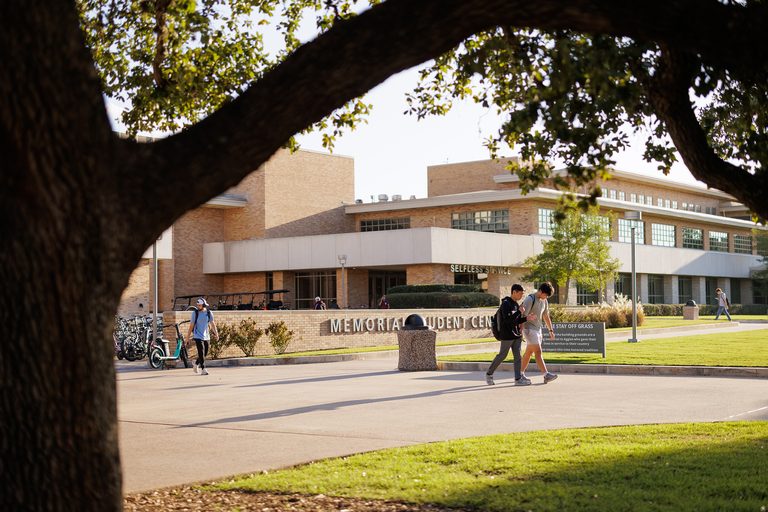
Texas lawmakers will convene Tuesday for a hearing of the House Higher Education Committee to assess whether public universities are doing enough to shield critical research from foreign adversaries. The hearing comes as Governor Greg Abbott plans to unveil further steps aimed at limiting foreign influence in education during a campaign event later that day.
Legislative backdrop
The committee’s agenda does not reference a specific bill, but its focus on screening, reporting, oversight and the Higher Education Research Security Council mirrors House Bill 127. Rep. Terry M. Wilson, R‑Georgetown, authored the bill last year. HB 127 created the council and established safeguards for certain researchers, foreign gifts, academic partnerships and work‑related travel.
Under the law, Texas universities must screen foreign citizens who are not permanent residents, as well as individuals with work, training or institutional ties to a foreign adversary, before hiring them for research positions or granting them access to research data. A “foreign adversary” is defined as a country identified as a national‑security risk in the three most recent annual threat assessments by the U.S. Director of National Intelligence, or any country the governor designates after consulting the Texas Department of Public Safety director.
Key provisions of HB 127
HB 127 generally bars state universities and their employees from accepting gifts from foreign‑adversary governments or entities, though gifts from individual citizens may be accepted after review. The law also requires colleges to establish an approval process and to track certain work‑related international travel. Public universities cannot spend state appropriations until their boards certify compliance, and institutions that fail to correct violations identified by a state auditor within 180 days risk losing future funding increases.
Testimony and concerns
At a July 28 Senate hearing, Kevin Gamache, chief research‑security officer for the Texas A&M University System and chair of the new council, praised HB 127 as “on the mark,” saying it provides a flexible framework to protect research without unduly restricting collaboration. Gamache cautioned that the law must not become a blanket, nationality‑based screening tool.
Kate Bierly of the conservative Texas Public Policy Foundation, scheduled to appear with Governor Abbott on Tuesday, argued that Texas A&M’s record raises questions about the ability of its research‑security office to reliably identify foreign influence. She advocated for detailed annual disclosures from universities and affiliated organizations on foreign gifts, contracts, donations, their purposes, values, beneficiaries, conditions and duration.
Governor Abbott’s broader agenda
Abbott’s focus on foreign influence predates HB 127. In a 2024 executive order, he directed state agencies and public universities to protect Texas’ infrastructure, intellectual property and personal information from entities tied to China, Cuba, Iran, North Korea, Russia and the regime of Nicolás Maduro in Venezuela. The order barred employees from accepting gifts or work trips paid for by those entities, prohibited participation in foreign talent‑recruitment programs, and required tracking of personal travel to those countries.
In January, Abbott issued a separate directive freezing new H‑1B visa petitions for state agencies and public universities unless written approval is obtained from the Texas Workforce Commission. The freeze runs through May 31, 2027. Rep. Tony Tinderholt, R‑Arlington, indicated that the H‑1B policy will be part of Tuesday’s discussion.
Impact on H‑1B employment
Texas has 16 universities with the Carnegie Foundation’s top research classification (R1), more than any other state. Records obtained by The Texas Tribune show that 44 public universities, health centers and system offices reported sponsoring 3,332 H‑1B workers to the Workforce Commission after Abbott’s directive. As of July 17, no public university or state agency had sought the commission’s permission to file a new H‑1B petition.
Texas State University’s director of communications, Jayme Blaschke, clarified after the hearing that a recent filing was an H‑1B extension for an existing employee, not a new hire, and therefore did not require Workforce Commission approval.
Looking ahead
The upcoming hearing will determine whether additional legislative or executive actions are needed to ensure Texas’ research enterprises remain secure while preserving valuable international collaboration. Stakeholders from universities, policy groups and the governor’s office will weigh in on how best to balance national‑security concerns with academic freedom.
Original reporting: Texas Tribune (HLL/CB) — read the source article.