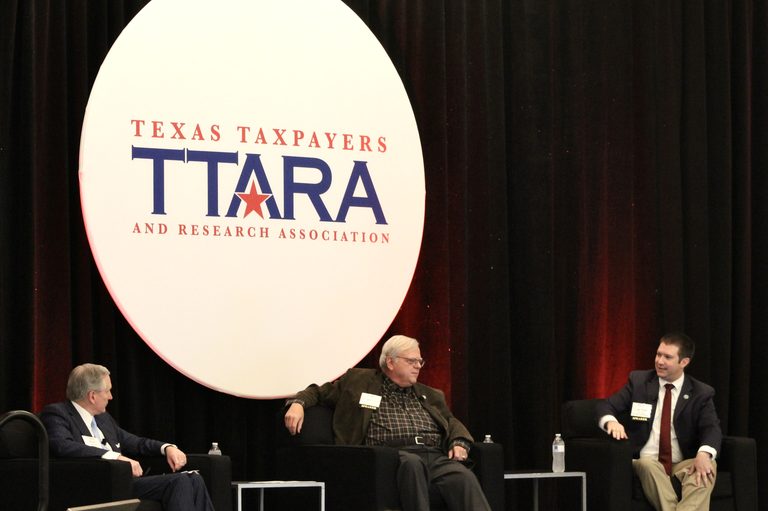
At a November 20 panel hosted by the Texas Taxpayers and Research Association in Austin, two Republican state lawmakers expressed deep skepticism about Democratic Gov.-elect Gina Hinojosa’s plan to issue a one‑time $1,500 payment to every Texas household. The proposal, outlined in a bill filed by Sen. Roland Gutierrez (D‑San Antonio), would pull nearly two‑thirds of the $27 billion Rainy Day Fund – the state’s primary emergency reserve – to fund the payments.
Fiscal prudence and constitutional concerns
Rep. Cody Vasut (R‑Angleton) questioned the wisdom of draining a fund that exists for genuine emergencies, such as a Category Five hurricane. “Why would you take a one‑time fund and spend it down like that?” he asked, noting that the fund’s balance was at its legal cap for the first time in state history.
Vasut also raised “sincere equity concerns,” pointing out that the $1,500 would go to every household regardless of size, tax contributions, or need. He added, “Now, also, it’s unconstitutional… You can’t just give people money.”
Historical context and alternative relief measures
Sen. Paul Bettencourt (R‑Houston) reminded the audience that Texas considered state‑funded stimulus checks during the COVID‑19 pandemic but abandoned the idea because any payment over $600 would trigger 1099 reporting requirements. He emphasized that Texas has already deployed $51 billion in property‑tax relief, a program that reduces taxes for homeowners and businesses while preserving school‑district revenue.
Republicans highlighted the success of recent property‑tax reforms, including proposals from outgoing Gov. Greg Abbott to zero out school‑district property taxes – a move projected to cost about $8.6 billion per year but one that many conservatives view as a responsible way to lower the cost of living for families.
Legislative hurdles and potential voter involvement
GOP panel moderator G. Brint Ryan suggested that a constitutional amendment could place the check program on the ballot, estimating roughly 90 % voter support. Vasut countered, “I don’t think we’d ever let that out of the House,” underscoring the two‑thirds supermajority required to place amendments on the ballot and the likely need for bipartisan backing.
Democrats control 83 of the 150 seats in the Texas House, while Republicans hold 19 of the 31 Senate seats. Any amendment would therefore require substantial GOP cooperation, which appears unlikely given the expressed concerns.
Upcoming financial outlook
Incoming Comptroller‑elect Sarah Eckhardt must release a revenue report by Jan. 11, just before the 90th legislative session begins. Analysts project a multi‑billion‑dollar surplus for the next fiscal year, though it will fall short of the $33 billion surplus seen before the 2023 session and the $24 billion surplus ahead of the 2025 session.
Lawmakers, including Vasut, remain focused on building on existing tax‑relief measures rather than launching a costly, constitutionally questionable check program. “House Republicans are committed to good, conservative public policy and putting that forward to the people of Texas,” Vasut said, emphasizing a continued focus on responsible budgeting and targeted relief for taxpayers.
Original reporting: Community Impact — Frisco — read the source article.